Insulate the roof first, then the walls that face west and south. For the walls, external insulation (boards fixed outside and finished with plaster) usually performs best, internal insulation is easier but takes room space, and cavity insulation fills the gap in a double wall where one exists. Medium-density EPS boards (16 to 25 kg/m3) are the usual, affordable choice, and XPS is the better pick where moisture is a risk. Whatever you choose, cover it with plaster or cladding.
Why walls matter once the roof is done
A roof sees the sun from morning to evening. That is why it gets the first rupee. But the walls are a close second. In Lahore, Multan and Faisalabad the afternoon sun hits the west and south faces for hours. Brick and concrete soak that heat up during the day and keep releasing it into the room long after sunset, which is why a west-facing bedroom is still warm at midnight.
Insulating the wall slows that heat down. The AC then has less to fight, and the room stays steadier. It will not turn a hot house into a cold one on its own, but combined with a roof job it makes a real difference to comfort.
The three ways to insulate a wall
| Method | How it works | Pros | Cons | Best for |
|---|---|---|---|---|
| External wall insulation | Boards fixed on the outer face, covered with mesh and plaster | Keeps the brick itself cool, no loss of room space, fewer cold bridges at columns and beams | Needs a good plaster finish and careful fixing | New builds, renovations where the outside can be redone |
| Internal wall insulation | Boards fixed on the inner face behind plaster or a dry finish | Easy to do room by room, no scaffolding | Takes room space, the wall itself stays warm, risk of damp if done badly | Finished or rented houses where the outside cannot change |
| Cavity wall insulation | Insulation placed in the gap between two layers of wall | Uses space that already exists | Only possible where a cavity exists | Newer and commercial buildings with a cavity |
External insulation. This is what most engineers recommend when you have the choice. The board sits outside the wall, so the brick and the concrete columns stay on the inside, in the cooler part of the building. It also wraps the columns and beams, which are the weak spots through which heat travels. The finish is a layer of mesh and plaster, and that finish is what makes or breaks the job. We cover the full system on our EIFS page.
Internal insulation. You fix the boards inside and finish them with plaster or a dry lining. It is the practical choice when the outside cannot be touched, for example in a rented house or a building with a decorative front. The downside is that you lose a little room width, and the wall behind the board stays warm and can sweat if damp is not dealt with first.
Cavity insulation. If the wall is built as two layers with a gap, the gap can be filled or lined with insulation. Many houses in Pakistan have solid brick walls without a cavity, so this option applies mostly to newer and commercial buildings. Check what your wall really is before anyone quotes you for it.
Which material to use
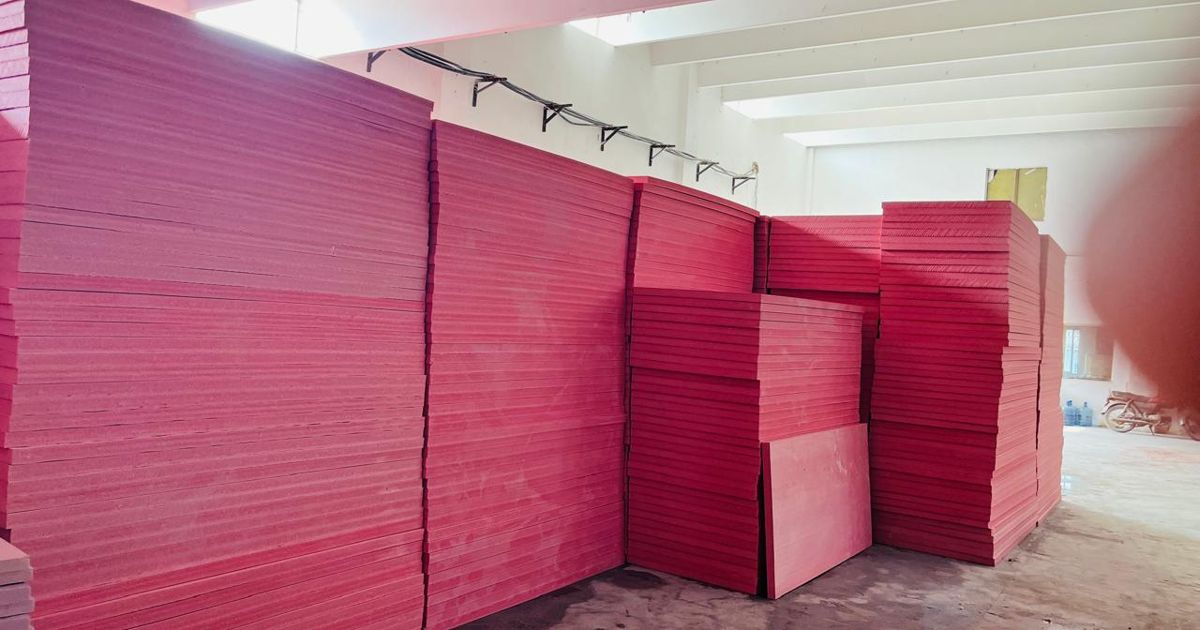
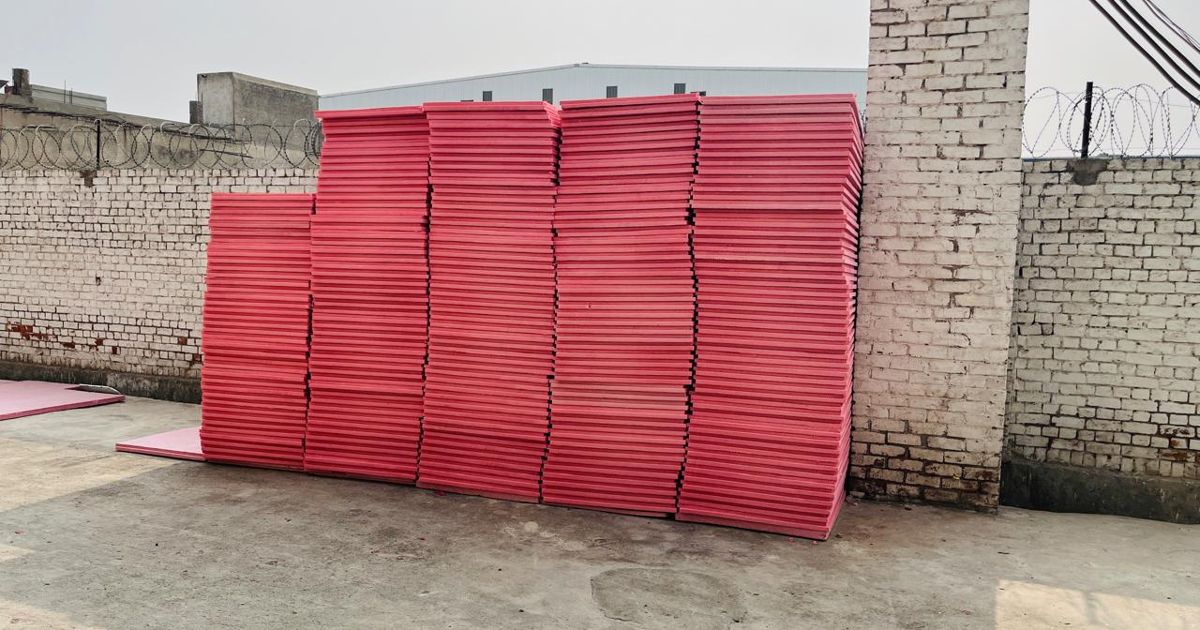
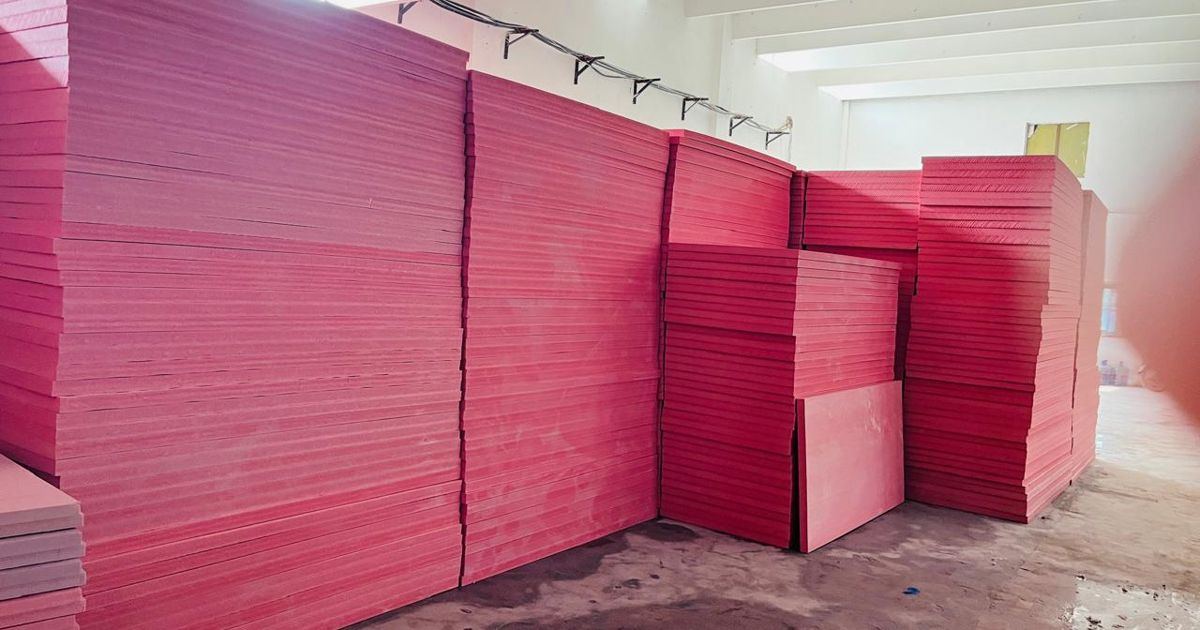
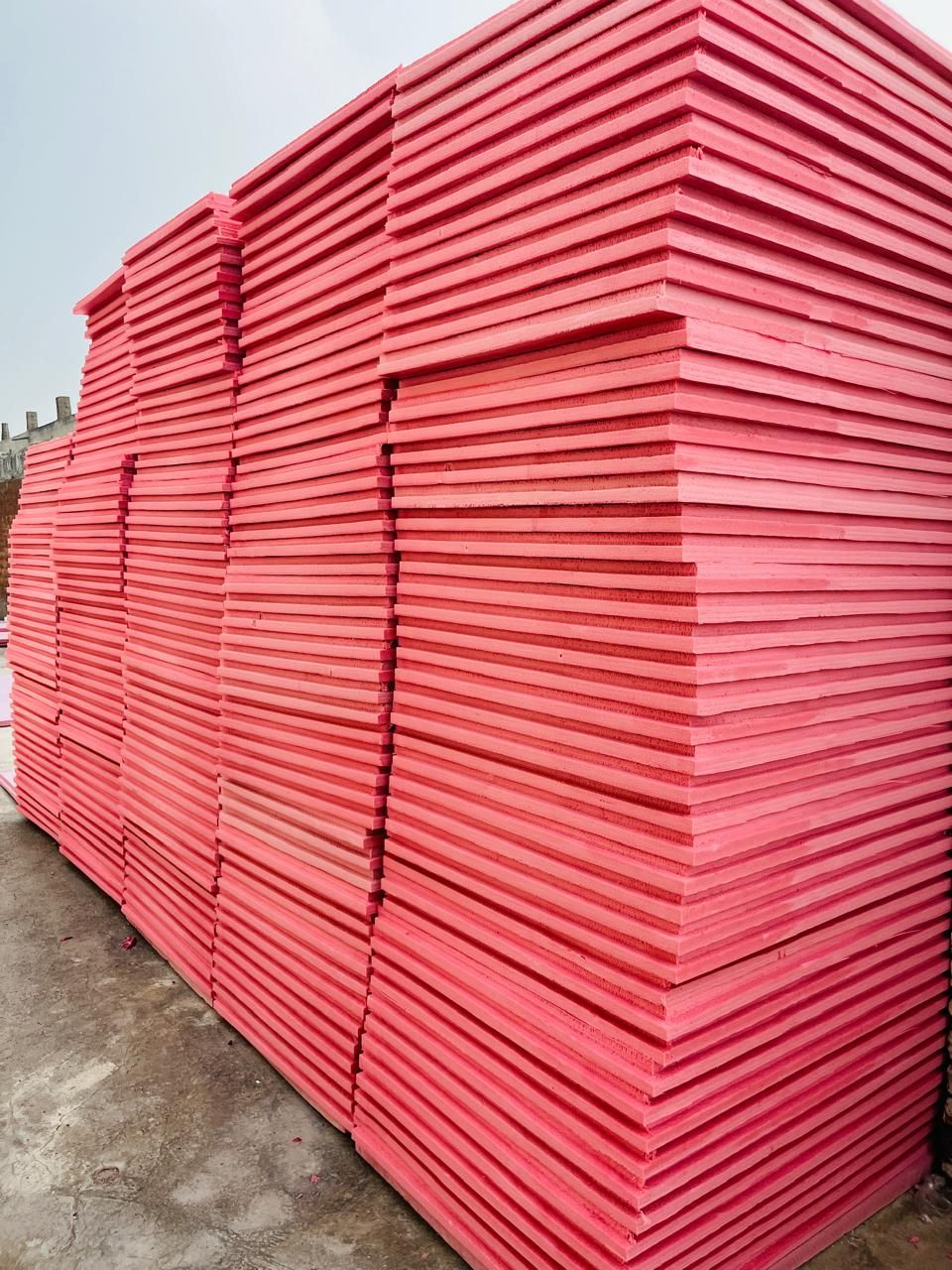
EPS (thermocol). The affordable standard. Medium density, 16 to 25 kg/m3, is typical for walls, covered with plaster or cladding. See our thermocol sheet price page.
XPS (Jumbolon). Denser and takes in less water. Choose it where the wall is exposed to moisture, near the ground, or where the finish will take knocks. See the XPS insulation board page.
PU foam spray. Sprayed on and seamless, but more expensive. It makes sense where you also want sealing. See PU foam spray.
How thick?
For most external and cavity jobs, 1 to 2 inch is common. The wall, not the board, usually sets the limit: the plaster build-up and the length of the fixings both grow with thickness. Going beyond 2 inch usually means longer anchors and a thicker finish, so ask your engineer first. For internal walls and partitions, 1 inch is typical because room space is limited.
What it costs: a worked example
Take a 400 sq ft wall, for example 10 ft high and 40 ft long. With a standard 8×4 ft thermocol sheet covering 32 sq ft, you need about 13 sheets plus a bit for cutting. At 3 inch and 25 kg/m3 (Rs 1,400 to 1,600 a sheet), that is roughly Rs 18,200 to 20,800 for the sheets.
With Jumbolon in 3×6 ft sheets (18 sq ft each), the same wall needs about 23 sheets. At 1 inch (Rs 1,200 to 1,800 a sheet) that is roughly Rs 27,600 to 41,400. At 2 inch (Rs 2,200 to 3,200 a sheet) it is roughly Rs 50,600 to 73,600.
Those figures are the boards only. Mesh, adhesive, anchors, plaster and labour are extra, and for external insulation the finish is often a bigger part of the bill than the board. Ask for the full price before you compare quotes.
The details that decide whether it works
Columns and beams. These carry heat around the boards. Wrap them with insulation too, or the wall will leak heat exactly where the structure sits.
Joints. Boards should be tight, with the joints staggered like bricks, and any gaps sealed.
Finish. External boards need mesh and a proper plaster coat, otherwise cracks let rain in behind the board.
Damp. Insulation does not cure a wet wall. Fix leaks and rising damp first.
Windows and doors. Return the insulation into the window reveals so there is no bare strip around the opening.
Fire. EPS and XPS are both combustible. Cover them, and keep them away from flame and heaters.
Which wall first?
Start with the walls that take the afternoon sun: west first, then south. East and north walls take far less heat, and they can wait. If your budget allows only one job, do the roof. Our roof heat proofing guide explains the options.
Choosing by city
Lahore, Multan, Faisalabad. Long, hot summers, so external insulation on west and south walls does the most good. Karachi. The humidity and salt air make moisture the bigger worry, so choose XPS or a very good finish. Peshawar and Islamabad. Hot summers and cold winters, so wall insulation helps in both seasons, and the same boards work in both. If you are not sure which of these describes your house, tell us the city and the wall facing and we will say.
Mistakes to avoid
Insulating the walls and ignoring the roof, which is where most of the heat enters.
Skipping the mesh or the plaster coat to save money.
Leaving gaps at columns, beams and window edges.
Choosing internal insulation on a damp wall without fixing the damp.
Going thick without checking the fixings and the finish.
Send us the wall size and your city on WhatsApp and we will suggest a board and a thickness.
Insulation System, Gopi Rai Road, 3 km Katar Band Road, Gopi Rai, Lahore 53700. Phone and WhatsApp: +92 300 3679943. Email: Insulationsystems.eps@gmail.com. Open 24 hours. Find us on Google Maps.
Related Jumbolon and insulation guides
Explore our related solutions
Jumbolon Sheet Price • XPS Insulation Boards • Thermocol Sheet • Insulation Material in Pakistan • Get a Free Quote