Home / Services / Poultry Farm Insulation
Poultry Farm Insulation in Pakistan — 2026
Birds don’t do well with temperature swings — and Pakistan’s 45°C summers followed by cold winter nights put real stress on a shed that isn’t insulated. We supply the EPS, Jumbolon, and PU Foam that keep shed temperatures stable, at prices that work for a single shed, not just commercial-scale farms.
WHY BIRDS NEED A STABLE SHED, NOT JUST A COOL ONE
Temperature Swings Stress Birds More Than Heat Alone
Poultry farming is one of Pakistan’s fastest-growing agricultural sectors, but birds are genuinely sensitive to temperature change. It’s not just about avoiding extreme heat — a shed that swings between hot afternoons and cold nights puts birds under constant low-grade stress, which shows up as reduced feed conversion, slower weight gain, and higher mortality during weather extremes.
Insulation works the same way in a poultry shed as it does in a house — it slows heat moving in during the day and slows heat escaping at night, which keeps the internal temperature closer to the 22–27°C range birds actually need. The more stable that range stays, the less your heaters and exhaust fans have to fight to maintain it, which is where the real electricity savings come from.
CHOOSING THE RIGHT MATERIAL
EPS, Jumbolon, or PU Foam — What Actually Fits Your Shed?
We supply all three. Here is the honest comparison, not a push toward whichever costs more.
| Material | Heat Reduction | Moisture Resistance | Typical Use in a Shed | Price |
|---|---|---|---|---|
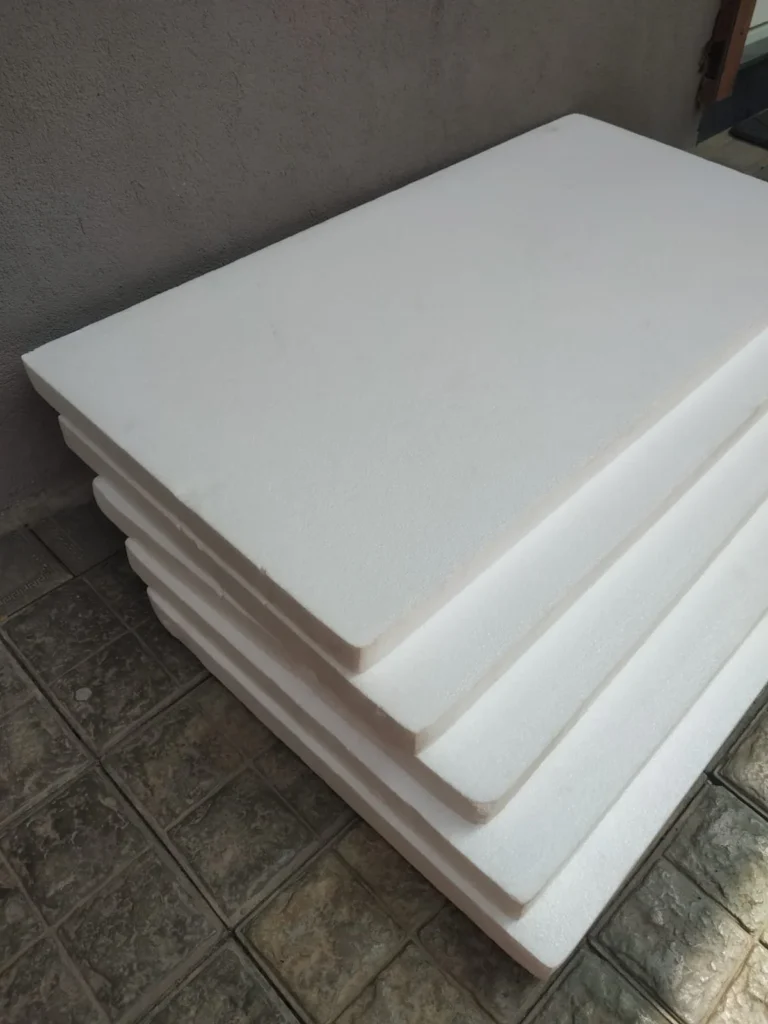
| EPS Thermocol | Good | Moderate | Walls, ceilings, budget-friendly standard | Rs. 480 to 1200 per sheet |
| Jumbolon (XPS) | Very High | High | Roof lining, humid coastal regions | Rs. 1200 to 3200 per sheet |
| PU Foam Spray | Highest | Highest, seamless | Metal roof sheds, leak-prone areas | Rs. 45 to 120 per sq ft |
WHERE TO INSULATE FIRST
Roof vs Wall — Which Matters More?
Roof — Insulate This First
The roof takes the most direct sun exposure all day, every day. If you can only afford to insulate one surface, the roof gives you the biggest temperature drop for the money, this is true for nearly every shed we have worked on.
See Roof Insulation Options →Walls — Add This for Full Stability
Wall insulation matters most overnight and during winter, when it is what keeps warmth from escaping. A shed with roof-only insulation still gets reasonably good results, but roof plus wall together gives the most consistent year-round temperature.
See Wall Lining Options →WHY IT PAYS OFF
The Numbers Behind Insulating a Poultry Shed
Lower Electricity & Fuel Bills
Less work for fans, coolers, and heaters means a directly lower monthly bill, usually the first benefit farmers notice after insulating.
Better Feed Conversion
Birds under less thermal stress convert feed to weight more efficiently, this is where insulation often pays for itself fastest.
Lower Mortality in Extreme Weather
Heat stress and sudden cold are major mortality triggers, a stable shed temperature reduces these spikes significantly.
More Consistent Egg Production
For layer farms, temperature stress directly affects laying consistency, insulation helps smooth this out across seasons.
Usually Pays Back in a Few Cycles
Most farms recover the insulation cost within several production cycles through the combined savings above, it is genuinely an investment, not just an expense.
Works for Small Sheds Too
You do not need a commercial-scale operation to benefit, even a single small shed sees a noticeable difference from roof-only insulation.
A FEW THINGS WORTH GETTING RIGHT
Common Mistakes That Waste an Insulation Job
Choosing by Price Alone
The cheapest sheet on offer is often low-density material that crushes under shed mud or roof load and stops insulating properly within a season.
Unsealed Joints
Gaps between sheets let heat in regardless of how good the panel material is, sealing every joint matters as much as the material choice.
Ignoring Moisture Exposure
A shed with high humidity or frequent washdown needs Jumbolon or PU Foam, not standard EPS, which can gradually absorb moisture in those conditions.
Blocking Ventilation Gaps
Insulation needs to work with your ventilation system, not against it, sealing every gap including intentional vents defeats the airflow design.
FAQ
Poultry Shed Insulation — Common Questions
What’s the best insulation material for a poultry shed in Pakistan?
It depends on your conditions, not a single “best” answer. EPS is the standard, affordable choice for most sheds. Jumbolon (XPS) is worth the extra cost in humid or coastal regions where moisture resistance matters more. PU Foam Spray is the right call if your roof also has leakage issues, since it solves both heat and water in one job.
Should I insulate the roof or the walls first if I have a limited budget?
Start with the roof, it takes the most direct heat all day and gives the biggest temperature improvement per rupee spent. Walls matter most for nighttime and winter stability, so add them when budget allows, but roof-only insulation still makes a real difference on its own.
How much can insulation actually reduce my electricity bill?
Most farms see roughly 30-40% lower electricity and fuel costs for heating and cooling once the shed is properly insulated, since fans and heaters do not have to work as hard to maintain temperature. The exact number depends on your shed size, current setup, and local climate.
Is insulation worth it for a small poultry farm, or only large commercial operations?
It is worth it for farms of any size. Even a single small shed with roof-only EPS insulation shows a noticeable improvement in summer, and you do not need a large order to get factory-direct pricing from us, we regularly supply small farms, not just commercial-scale operations.
What’s the insulation for poultry farms price in Pakistan?
It depends on material, thickness, and shed size. EPS sheets run roughly Rs. 480-1,200 per sheet depending on size and thickness. Jumbolon (XPS) runs Rs. 1,200-3,200 per sheet. PU Foam Spray is priced per square foot, roughly Rs. 45-120 depending on density and area. Tell us your shed dimensions and we will give you an exact quote rather than a rough range.
Can poor installation reduce how well the insulation works?
Yes, significantly. Unsealed joints, gaps at edges, and skipping ventilation compatibility checks can noticeably reduce how well even good insulation material performs. We always recommend proper joint sealing as part of the job, the material quality only matters if the installation is done right too.
Do you deliver to poultry farms outside Lahore?
Yes, same-day dispatch from our Lahore factory, with 1-3 day delivery to Karachi, Islamabad, Faisalabad, Multan, Peshawar, and other major cities where poultry farming is common. For larger shed projects we can also discuss phased delivery.
Insulating a Poultry Shed?
Tell us your shed size, location, and whether moisture is a concern, we will recommend EPS, Jumbolon, or PU Foam honestly based on your situation.
