Home / Services / Soundproofing
Soundproofing & Acoustic Insulation in Pakistan — 2026
Honest advice first: not every insulation material is good at blocking noise. We’ll tell you which of our materials actually helps with sound, and when you genuinely need glass wool or rock wool instead of EPS.


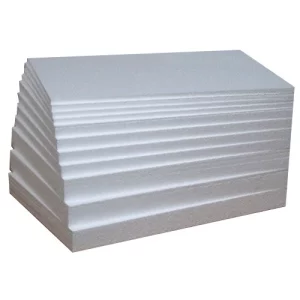
EPS Helps a Little With Sound. Glass Wool and Rock Wool Are Built For It.
We sell a lot of EPS Thermocol, and people sometimes assume it will solve a noise problem the way it solves a heat problem. It does dampen sound somewhat — any solid material between two spaces blocks some noise — but EPS’s structure (light, rigid, lots of small closed air cells) isn’t what acoustic engineers reach for. It was never designed to absorb sound energy; it was designed to block heat.
Glass wool and rock wool are a different story. Their fibrous, open structure is genuinely good at absorbing sound waves rather than just blocking them — which is why recording studios, cinemas, and noise-sensitive commercial spaces are built with mineral wool, not foam board. If your goal is a quiet home theater, studio, or office near a busy road, this is the material that actually does the job.
So here’s our honest recommendation: if sound is your main problem, go with glass wool or rock wool. If you want a roof that’s both cooler and a bit quieter — say, a bedroom under a flat roof near traffic — EPS or PU Foam gives you a reasonable secondary benefit while doing its primary job of blocking heat.
Sound Performance — Material by Material
An honest side-by-side, not a sales pitch toward whichever we’d rather sell you.
Glass Wool ⭐
Excellent — built for it
Good
Studios, cinemas, quiet offices, partition walls
Rock Wool ⭐
Excellent — denser than glass wool
Excellent + fireproof
Noise-sensitive industrial & fire-rated walls
EPS Thermocol
Modest — secondary benefit only
Excellent
Heat-first projects where some sound help is a bonus
PU Foam Spray
Moderate — seamless layer helps a bit
Excellent + waterproof
Roofs needing heat, water, and minor noise reduction together
Jumbolon (XPS)
Modest — denser than EPS, still not wool-level
Excellent
Heat-first projects, slightly better sound than EPS
If a contractor tells you EPS alone will “soundproof” a room, that’s overselling it. For genuine acoustic treatment, glass wool or rock wool is the right call.
What Are You Actually Trying to Quiet Down?
Recording Studio or Home Theater
Go with glass wool or rock wool panels on walls and ceiling. This is the one application where EPS genuinely isn’t the right tool for the job.
Office Partition Walls
Glass wool inside partition cavities cuts down conversation noise between rooms far better than foam board alone.
Bedroom Near a Busy Road
If heat is also a problem, EPS or PU Foam on the roof gives you cooling plus a modest noise dampening bonus — a reasonable two-birds option.
Factory or Generator Room
Rock wool is the standard here — handles both the noise and the heat from machinery, plus it’s fire-resistant around hot equipment.
Poultry Shed Near Residential Areas
EPS roof insulation (which you likely need anyway for temperature control) plus rock wool wall lining if noise complaints are an issue.
Cinema, Event Hall, or Auditorium
Rock wool acoustic panels combined with proper wall framing — this is a job worth getting an acoustic-specific recommendation for, not a generic insulation order.
What These Materials Cost
Glass Wool Roll (FSK-faced)
per roll
Rs. 4,000–5,000
View Details →
Rock Wool Blanket
per m²
Rs. 1,100–1,500
View Details →
EPS Thermocol Sheet (heat-first)
per sheet (8×4 ft, 2″)
Rs. 960–1,200
View Details →
PU Foam Spray (heat + water + sound)
per sq.ft
Rs. 45–120
View Details →
Common Questions About Soundproofing
Not on its own — no, at least not the way glass wool or rock wool would. EPS gives some modest noise dampening as a side effect of being a solid barrier, but its structure isn’t built to absorb sound energy the way fibrous wool insulation is. If sound is your main concern, we’d point you toward glass wool or rock wool instead.
Glass wool or rock wool panels, properly fitted into wall and ceiling cavities with attention to sealing gaps. This is genuinely one case where we’d steer you away from our own EPS products toward wool insulation because it’s the right tool for this specific job.
To some degree, yes — EPS Thermocol and PU Foam Spray both block heat well and provide a secondary, more modest noise-dampening benefit. If heat is your primary problem and noise is a secondary concern, one of these can reasonably cover both. If noise is your primary problem, you’ll want wool insulation specifically.
Rock wool is generally denser than glass wool, which gives it a slight edge for sound absorption, plus it’s naturally fire-resistant, useful around generator rooms or industrial equipment. Glass wool is lighter, more affordable, and still performs very well for most residential and office soundproofing needs. Neither is a wrong choice, it depends on your budget and whether fire resistance matters for your specific space.
It’s less about the birds and more about neighbors, sheds near residential areas sometimes get noise complaints from fans, equipment, or the birds themselves. Since most sheds already need EPS roof insulation for temperature control anyway, adding rock wool wall lining is a practical way to address noise complaints without a separate major project.
We supply both. EPS, Jumbolon, and PU Foam are our core specialty for heat insulation, but we also stock glass wool, rock wool, and other materials for situations like this where they’re genuinely the better fit. See our full Insulation Materials page for the complete range and pricing.
Tell Us What You're Trying to Quiet Down
We’ll recommend the material that actually works for your situation — wool for sound, EPS or PU Foam if heat is the bigger problem.
