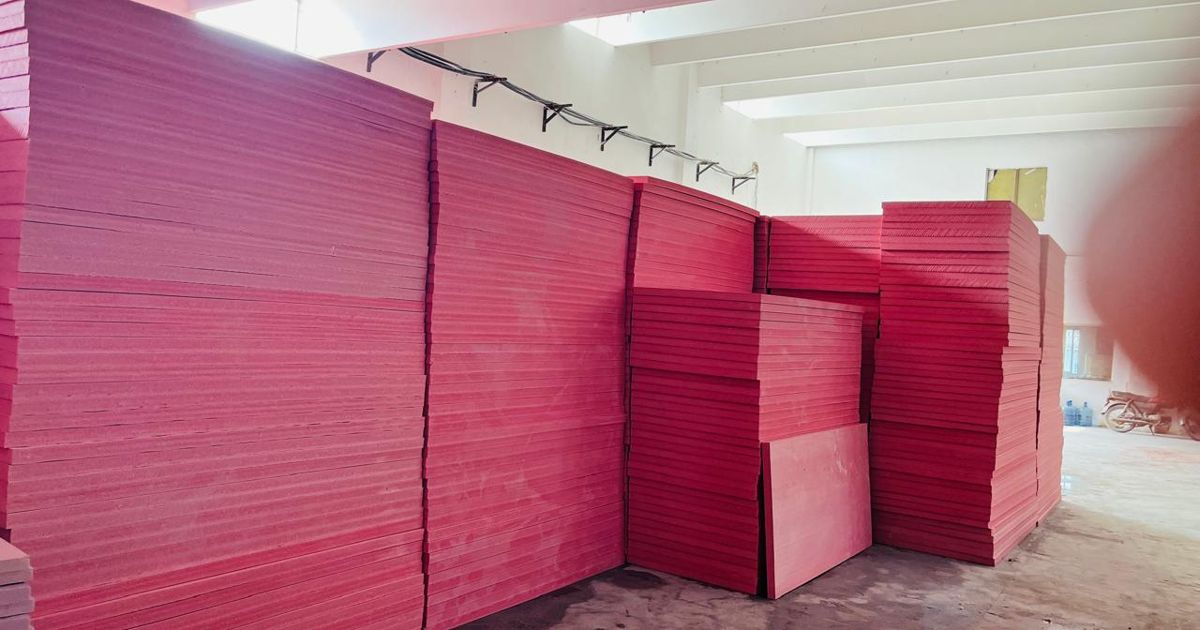
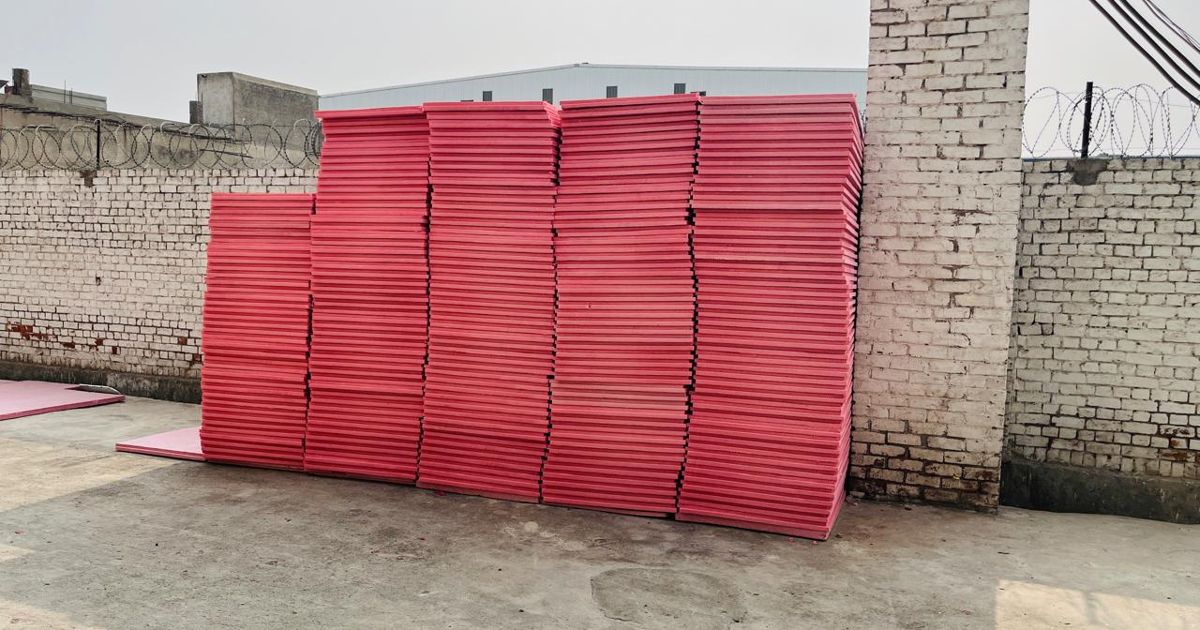
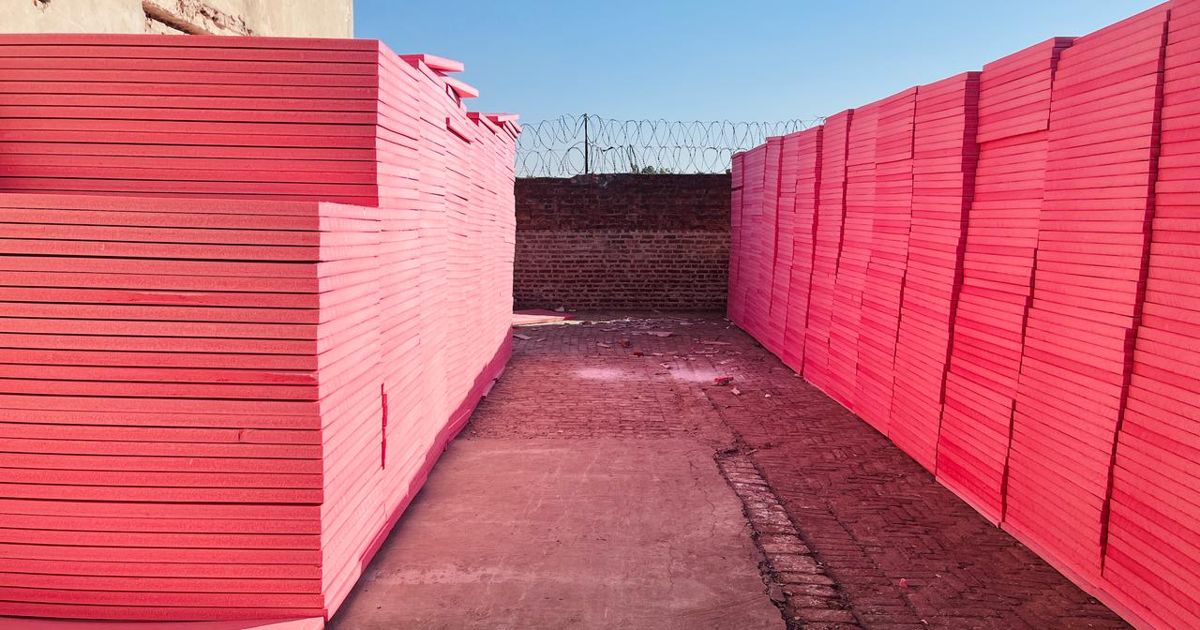
Ask for the material, density, thickness and a test report in writing. Then weigh the sheet, because a board that weighs less than it should is a board that is lighter than it was sold. Look at the cut edge: XPS has fine, even cells, while EPS shows tiny fused beads. And do a simple soak test on an offcut: a good XPS board gains almost no weight in water. None of this needs a lab, only a tape measure, a scale and about ten minutes.
Why two boards that look the same can be very different
Insulation is the one part of a building that disappears behind the screed and the plaster. Once it is covered, nobody can see it, and the first time you find out whether you bought the right board is the summer electricity bill, or the first leak.
That is why quality is worth ten minutes before you pay. A lighter board uses less material, so it costs less to make. A thinner board costs less still. And in a market where the same white or pink foam goes by many names, EPS can be sold under the name of XPS. The sheets look alike on a pile in a yard. They do not behave alike on a roof.
Step 1: Is it really XPS?
Cut a small offcut or look at a fresh edge. XPS is extruded, so it has a smooth skin and a uniform, fine cell structure with no beads. EPS is made of fused beads, and you can pick out the bead pattern with your eye or your thumbnail. If the seller calls it XPS and you can see beads, it is EPS. That is not automatically bad, EPS is a good material, but it should not cost XPS money. Our Jumbolon vs Thermopore guide explains the difference in detail.
Step 2: Weigh it (the density check)
Density is weight divided by volume: kilograms per cubic metre. A seller can write any number on a page, but the board has to obey physics. Here is how to check.
Take a whole 3×6 ft sheet. Its area is about 1.67 square metres. Multiply by the thickness in metres (2 inch is 0.0508 m) and you get its volume. Then multiply by the density you were promised. That is what it should weigh. For our listed densities, a 3×6 ft sheet should weigh about:
| Thickness | Listed density | Should weigh about |
|---|---|---|
| 1 inch | 25 to 30 kg/m3 | 1.1 to 1.3 kg |
| 2 inch | 30 to 35 kg/m3 | 2.5 to 3.0 kg |
| 3 inch | 35 kg/m3 | about 4.5 kg |
| 4 inch | 35 to 40 kg/m3 | 5.9 to 6.8 kg |
If you cannot lift a whole sheet onto a scale, cut a small offcut and use the same sum. A piece 1 m long, 0.5 m wide and 0.05 m thick has a volume of 0.025 m3. At 30 kg/m3 it should weigh 0.75 kg. If it weighs 0.5 kg, the real density is about 20 kg/m3, which is a very different board from the one you were quoted.
Step 3: Check thickness and flatness
Measure the thickness with a tape or a ruler at all four corners and in the middle. The reading should be the same all over, within a few millimetres of what was promised. Then lay two boards edge to edge on a flat floor. They should sit flush with no rocking and no gap. Warped or uneven boards leave gaps on the roof, and heat finds every gap.
Step 4: Ask about strength
Compressive strength, measured in kilopascals (kPa), tells you how much load the board takes before it crushes. For a roof people walk on, it matters a lot. Typical XPS boards fall in the range of about 200 to 700 kPa, depending on grade. Ask for the figure and for the test report. ASTM C578, the standard that covers EPS and XPS insulation boards, is the one to ask about. A seller who cannot give you a number, or who gets vague when you ask, is telling you something.
Step 5: The water test
This one is simple and surprisingly telling. Cut a small piece, weigh it, then push it under water with a weight on top and leave it for 24 hours. Take it out, wipe it and weigh it again. Good XPS gains almost nothing, since its closed cells absorb well under 1% of their volume. A big weight gain means the board is not what it was sold as.
Step 6: Smell, dust and crumbling
Break off a corner. It should snap cleanly, not crumble into powder. A strong chemical smell can mean the board was shipped fresh from the line. Freshly extruded XPS releases gas for a while, and it can shrink slightly as it settles. Ask how long boards rest before dispatch.
Step 7: Put it on the invoice
A verbal promise disappears the moment the screed goes on. Before you pay, make sure the invoice shows four things: the material (XPS), the density, the thickness and the size. If a seller will not write it down, ask yourself why.
Red flags
A price far below everyone else’s for the “same” thickness.
A refusal to state the density, or a different answer each time you ask.
Visible beads on an edge when the board is sold as XPS.
A board that is clearly lighter than the weight table above.
No datasheet, no test report, no factory you can visit.
Boards that are warped, cracked or crumbling at the edges.
If you are buying from another city
Most of our customers outside Lahore, in Karachi, Multan, Faisalabad or Peshawar, cannot walk into the yard. That is fine, and these checks still work. Ask for a short video of the cut edge, one of the sheet on a scale with the weight visible, and a photo of the thickness measured at a corner. A seller who is proud of the board will not mind. You can also send your own contractor to look at the stock before the truck leaves.
What you can check with us
We make our XPS boards at our own factory in Lahore, on Gopi Rai Road. You are welcome to visit, look at the boards, ask for the density we will write on your invoice and compare it with the weights above. See our current sizes and rates on the Jumbolon sheet price page, or read the overview on our XPS insulation board page.
A safety note: do not test insulation by burning it. EPS and XPS both burn fast and give off thick smoke. Use the checks above instead.
Want to see our boards or get a quote? WhatsApp us your roof size and city.
Insulation System, Gopi Rai Road, 3 km Katar Band Road, Gopi Rai, Lahore 53700. Phone and WhatsApp: +92 300 3679943. Email: Insulationsystems.eps@gmail.com. Open 24 hours. Find us on Google Maps.
Related Jumbolon and insulation guides
Explore our related solutions
Jumbolon Sheet Price • XPS Insulation Boards • Thermocol Sheet • Insulation Material in Pakistan • Get a Free Quote