Thermopore, also sold as thermocol, is EPS foam. It costs the least and works well on a dry roof that is covered with screed. Jumbolon is XPS foam: it is denser, soaks up far less water and carries more load, but it costs roughly four to five times more per square foot. “Styrofoam” is a name shopkeepers use for both, so always ask which material you are really buying. For most house roofs in Lahore, Multan or Peshawar, 2 inch Thermopore at 20 kg/m3 is the sensible buy. Choose Jumbolon for roofs people walk on, wet areas and cold rooms.
Three names, two materials
Walk into any foam shop in Pakistan and you will hear three words used almost as if they meant the same thing. They do not, and mixing them up is how people end up overpaying or under-insulating.
Thermopore and thermocol are two names for EPS, expanded polystyrene. It is the white foam you can see is made of tiny fused beads. If you look closely at a cut edge you can pick out the bead pattern.
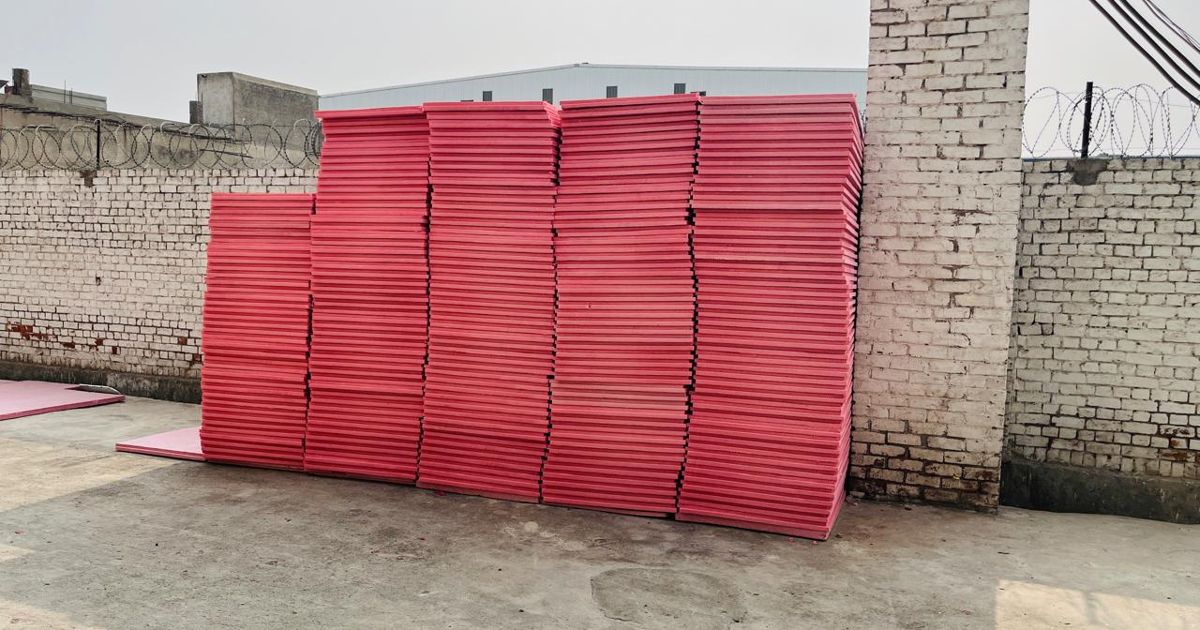
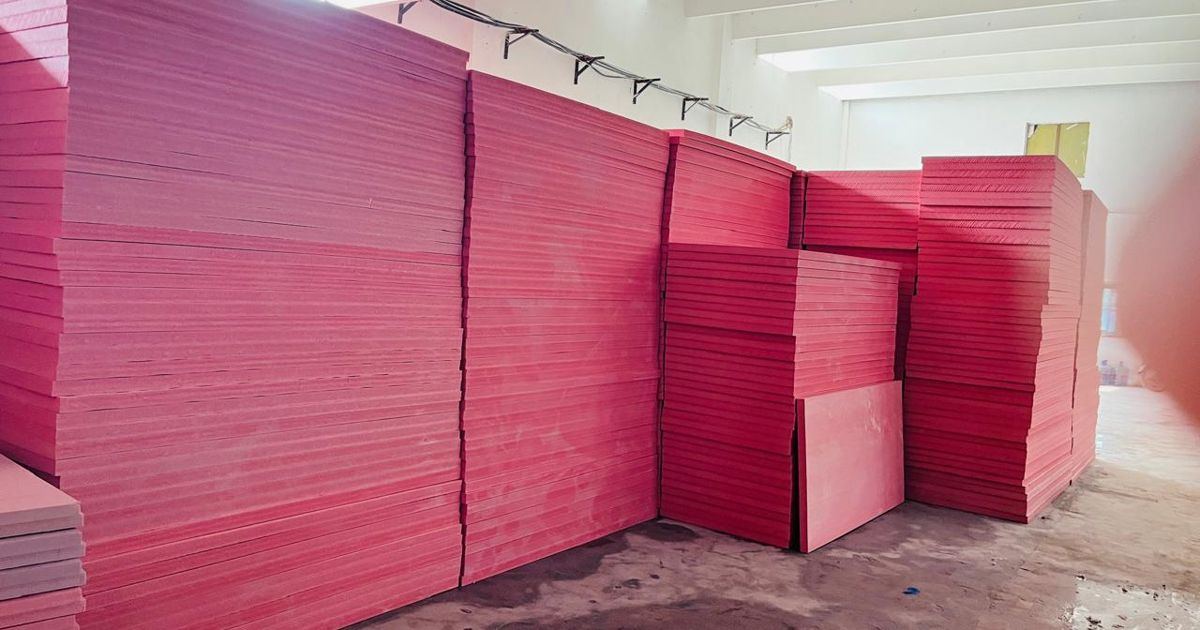
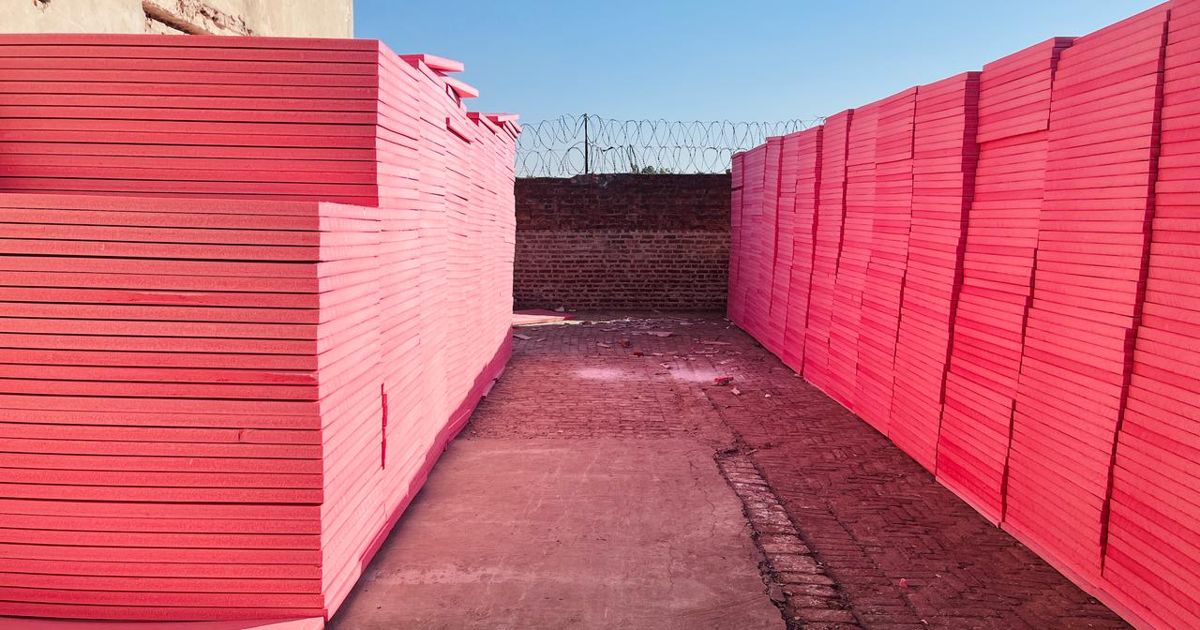
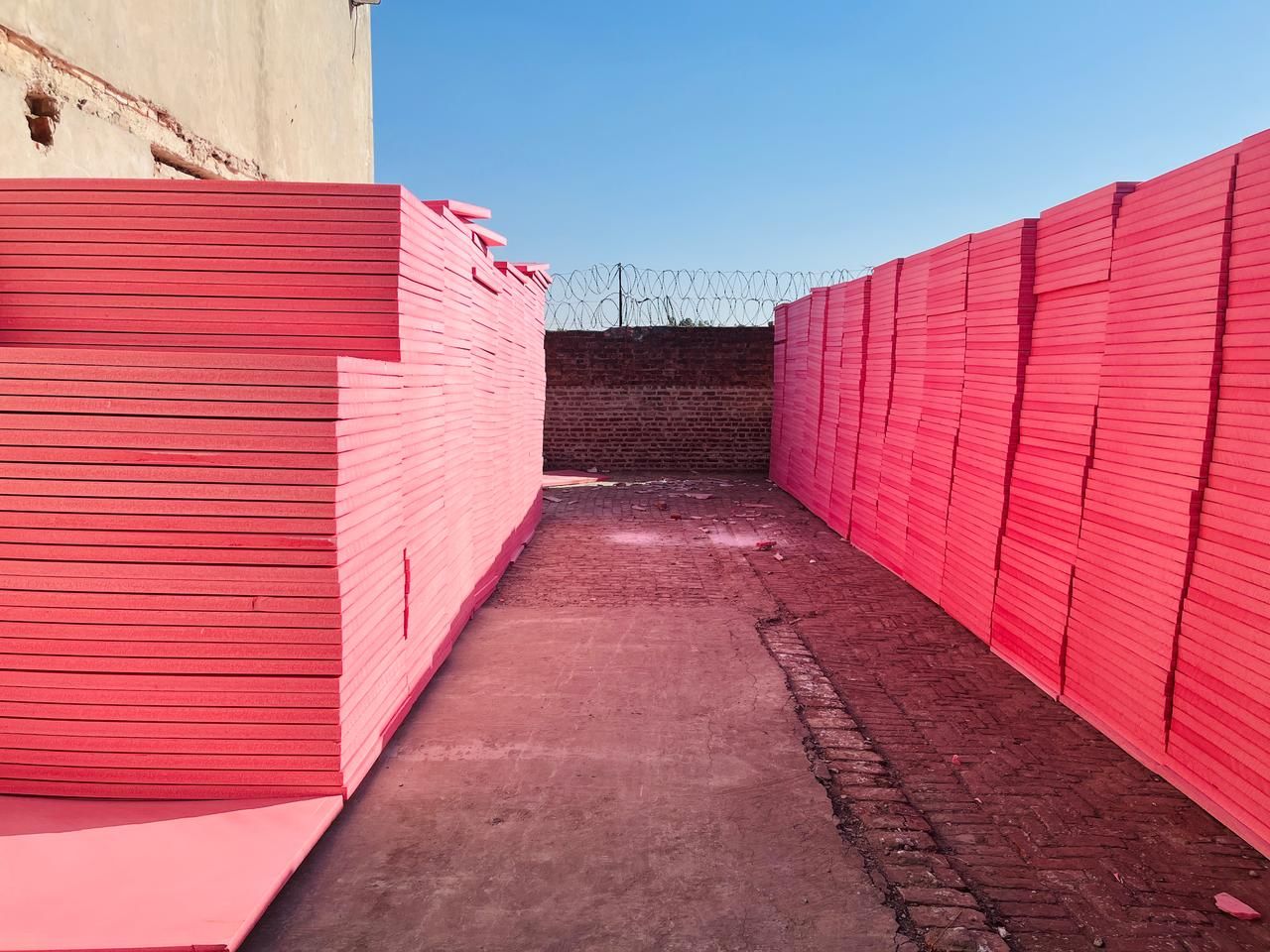
Jumbolon is the name most people use for XPS, extruded polystyrene. It is the pink or blue board with a smooth skin and no beads. Our own pink XPS boards are what customers ask for when they say Jumbolon sheet.
Styrofoam began life as a brand name for XPS, but in Pakistani shops it is used loosely for any white or pink foam board. So the word tells you nothing on its own. Ask two questions: is it EPS or XPS, and what is the density?
Why the way they are made matters
EPS is made by expanding small polystyrene beads with steam and fusing them into a block, which is then cut into sheets. Between the beads there are tiny gaps. They are small enough to trap air, so EPS insulates well, but they also mean that water can creep in over time.
XPS is made differently. Polystyrene is melted, mixed with a blowing agent and pushed through a die, and it expands into a continuous board as it comes out. The cells are closed and even, there are no bead gaps, and the surface is smooth. That single difference explains almost everything in the table below.
Side by side
| Factor | Thermopore / Thermocol (EPS) | Jumbolon (XPS) |
|---|---|---|
| Structure | Fused beads | Uniform closed cells |
| Insulation per inch (R-value) | about R-3.5 to R-4 | about R-5 |
| Water absorption | Low (ASTM C578 limits about 2 to 4% by volume) | Very low (under 0.3% by volume) |
| Compressive strength | 70 to 200 kPa | 200 to 700 kPa |
| Typical density | 10 to 40 kg/m3 | 28 to 45 kg/m3 |
| Price per sq ft (2 inch) | about Rs 30 to 34 | about Rs 122 to 178 |
| Best for | Dry roofs, walls, poultry sheds, packaging | Walkable roofs, wet and below-ground areas, cold rooms |
| Fire | Combustible, must be covered | Combustible, must be covered |
The price rows come from our current rate lists: an 8×4 ft, 2 inch, 20 kg/m3 thermocol sheet at Rs 960 to 1,100, and a 3×6 ft, 2 inch Jumbolon sheet at Rs 2,200 to 3,200.
What it really costs per square foot
This is the part most comparisons skip, so here is the actual arithmetic.
A standard 8×4 ft thermocol sheet covers 32 sq ft. At Rs 960 to 1,100 for the 2 inch, 20 kg/m3 sheet, that is about Rs 30 to 34 per sq ft. A 3×6 ft Jumbolon sheet covers 18 sq ft, and at Rs 2,200 to 3,200 for 2 inch it comes to about Rs 122 to 178 per sq ft. In round numbers, Jumbolon costs four to five times as much for the same thickness.
Now the twist. Jumbolon insulates better per inch, so you could reasonably ask whether a thicker thermocol sheet gets you the same insulation for less. It does. A 3 inch thermocol sheet at 25 kg/m3 (Rs 1,400 to 1,600 for 8×4 ft, about Rs 44 to 50 per sq ft) gives roughly R-10 to R-12. A 2 inch Jumbolon sheet gives about R-10. So on pure heat blocking per rupee, thermocol wins by a wide margin.
Jumbolon wins somewhere else: in what happens after the sheet is installed. It does not soak up water, it does not crush under heavy load, and it holds its shape. Those are the reasons to pay more for it, not the R-value.
Which one for your roof?
Take a 5 marla roof, about 1,361 sq ft. With 2 inch thermocol you need roughly 43 sheets and the sheets alone cost about Rs 41,000 to 47,000. With 2 inch Jumbolon you need about 76 sheets and the sheets alone cost about Rs 167,000 to 243,000. Screed, waterproofing and labour come on top of both.
For a normal dry roof that will be covered with a proper screed, 2 inch thermocol at 20 kg/m3 does the job. Typical indoor temperature drops are about 5 to 8 degrees C, although the real figure depends on your building and on how much you run the AC. In Lahore, Multan and Peshawar, where summer roofs bake and winters bring a chill, that is the best value we can honestly point to.
Move to Jumbolon if the roof will carry foot traffic, if water tends to stand on it, or if you want a thinner board for the same insulation. If the roof also leaks, ask about PU foam spray: it insulates and seals in one job, though it costs more than either sheet. Our roof heat proofing guide compares all three.
Walls, cold rooms, poultry sheds, basements and tanks
Walls. Medium-density EPS, 16 to 25 kg/m3, or XPS, always under plaster or cladding. EPS is the usual choice because of cost. See our wall insulation guide.
Cold rooms. Both are used at 30 to 40 kg/m3, with the thickness set by how cold the room has to be. Jumbolon is preferred where condensation is constant.
Poultry sheds. Thermocol at 30 to 40 kg/m3, commonly 2 inch, is the standard. The roofs are large, and the cost of XPS rarely makes sense.
Basements and foundations. Use XPS. EPS takes in more water over time in permanent dampness.
Water tanks. Either material works to keep stored water from heating in summer, so choose on budget.
Three things people get wrong
“Styrofoam is better than thermocol.” Not necessarily. Styrofoam is a word, not a grade. A dense EPS sheet beats a thin, light XPS sheet at the same price.
“XPS is fireproof.” It is not. Both XPS and EPS are combustible. Cover them with screed, plaster or cladding, keep them away from flame and heaters, and ask about a fire-retardant grade if the job needs it.
“Thicker is always better.” Up to a point. Two inches on a house roof does most of the work. Going to four inches costs a lot more and the extra gain is small, so match thickness to the job.
How to buy without getting fooled
Whichever you choose, get four things in writing on the invoice: the material (EPS or XPS), the density, the thickness and the sheet size. A light sheet sold as a dense one is the most common way buyers lose money, and it is invisible once the screed goes on. If you are in Lahore, you are welcome to see both materials at our factory on Gopi Rai Road before you decide. Our Jumbolon sheet price page and thermocol sheet price page list current rates, and our guide on how to check XPS board quality shows what to look for.
Not sure which one your roof needs? Send the roof size and a photo on WhatsApp and we will tell you honestly.
Insulation System, Gopi Rai Road, 3 km Katar Band Road, Gopi Rai, Lahore 53700. Phone and WhatsApp: +92 300 3679943. Email: Insulationsystems.eps@gmail.com. Open 24 hours. Find us on Google Maps.
Related Jumbolon and insulation guides
Explore our related solutions
Jumbolon Sheet Price • XPS Insulation Boards • Thermocol Sheet • Insulation Material in Pakistan • Get a Free Quote