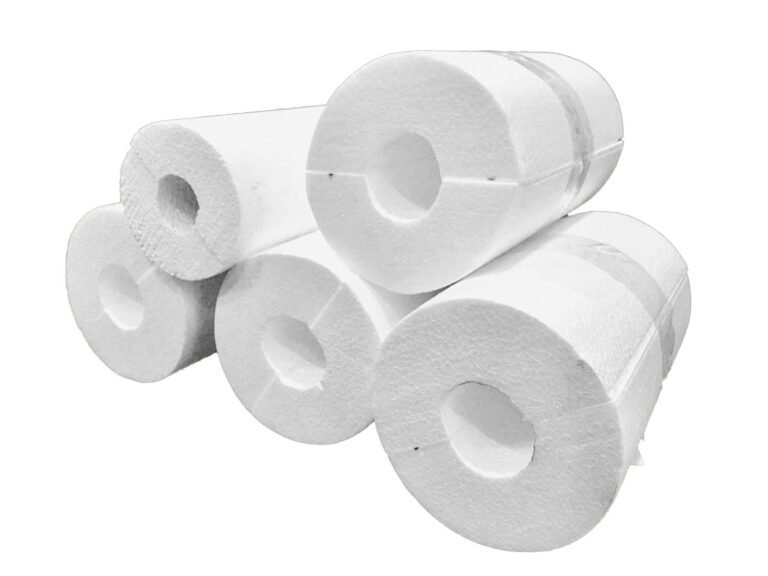
“Thermopore” is the name most people in Pakistan use for expanded polystyrene, or EPS. The same material is also called thermocol. Thermopore pipe insulation is EPS shaped into half-round or full-round sections that fit around a pipe. It is one of the lowest-cost ways to insulate a cold line, as long as you use it where it suits.
This page explains what you are buying, the jobs it does well, the jobs it should never be used for, and how to fit it.
What thermopore pipe sections are
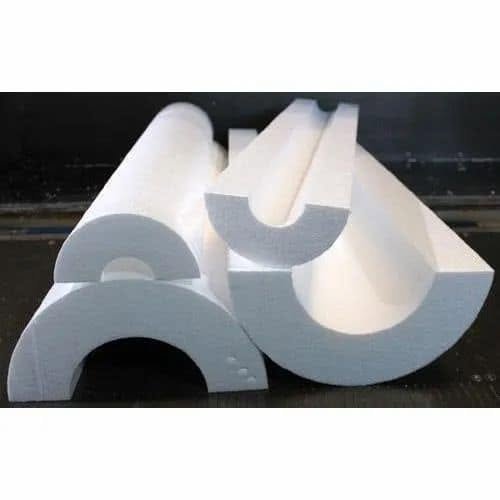
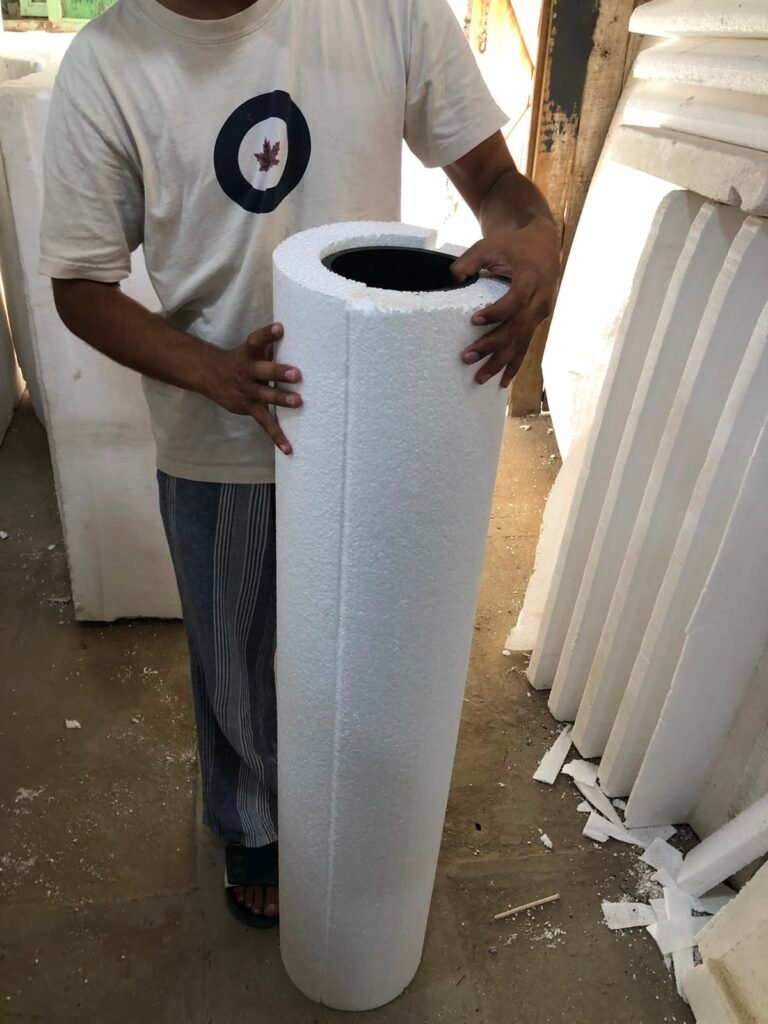
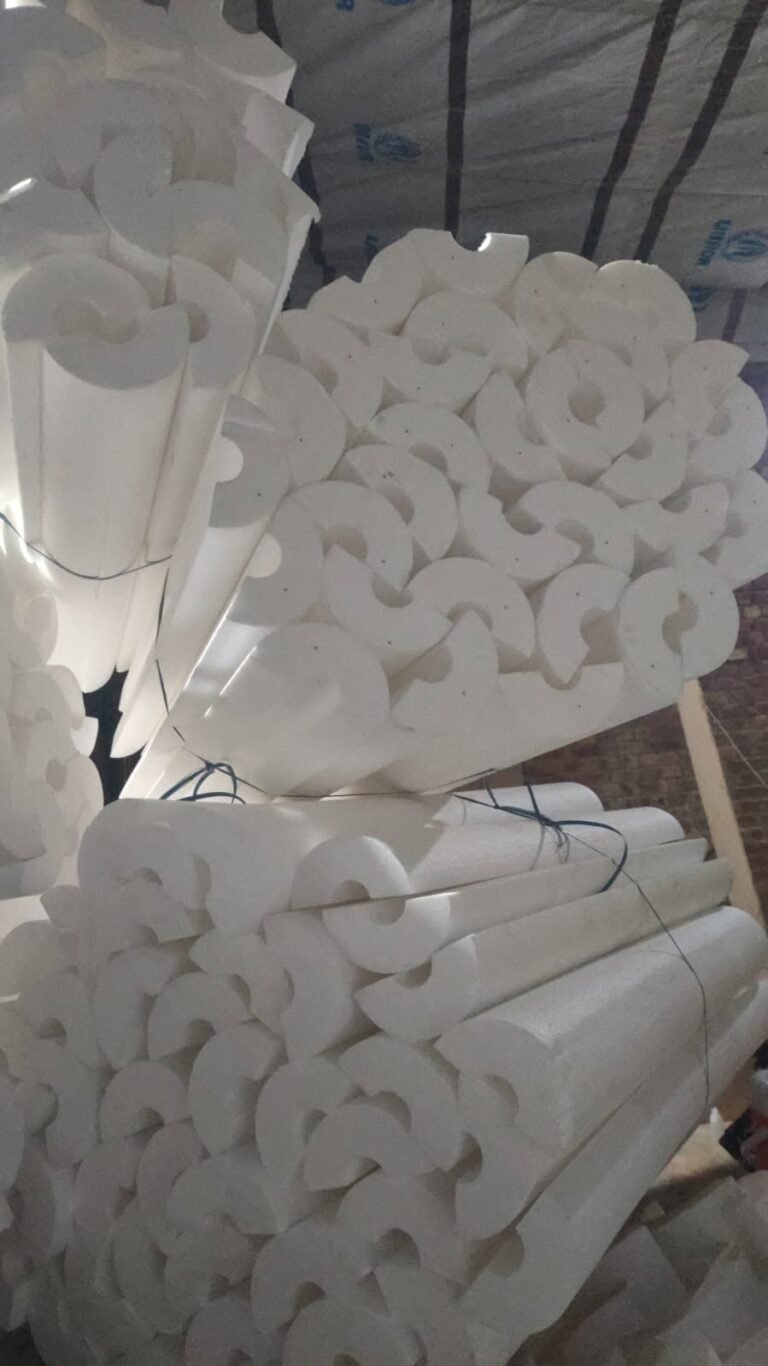
EPS is made from small polystyrene beads that are expanded with steam and moulded into blocks or shapes. The foam is about 98% air, which is why it is light and why it slows heat well. A pipe section is a length of EPS with a hollow centre cut to fit a pipe diameter. Many sections come in two halves that close around the pipe.
Our EPS is white and made in different densities. You can read the typical properties of each density on our EPS technical data page. If you need flat sheets instead of pipe sections, see our thermocol sheets.
Where thermopore pipe insulation works well
- Cold water lines on the roof or in a ceiling void, where summer heat warms the water.
- Chilled water pipes that need an outer cladding to protect the foam.
- AC drain lines that run through a warm space.
- Straight runs where you do not need to bend the insulation.
Where it does not work
- Steam and hot oil lines. EPS is only suitable up to about 70°C. Above that it softens and shrinks.
- Tight bends and small AC copper lines. EPS is rigid. NBR foam bends easily and is the better choice here. See AC pipe insulation.
- Open flame or near heat sources. EPS is combustible. Keep it away from flame and cover it.
- Outdoors without a cover. Sun and weather damage bare EPS.
Not sure? Our comparison of NBR foam, EPS and glass wool sets the three side by side.
Typical properties
| Property | Typical value |
|---|---|
| Thermal conductivity | About 0.035 to 0.040 W/m·K |
| Operating temperature | About -50°C to +70°C |
| Colour | White |
| Fire | Combustible. Cover it and keep it from flame. Fire-retardant grade available on request. |
Reference values for this type of material, not laboratory results for our product.
Sizes, thickness and price
| Item | Typical for EPS pipe sections |
|---|---|
| Section length | 1 m, sometimes up to 2 m |
| Thickness | Commonly 20 to 100 mm. Most cold-water and chilled jobs use 25 to 50 mm. |
| Pipe diameter | From about 15 mm up to several hundred mm. Sections are cut to match the pipe’s outside diameter. |
| Density | About 14 to 30 kg/m³. Higher density is firmer and handles knocks better. |
| Shape | Half-round (two halves close around the pipe) or full round |
These are typical market ranges. We cut to your pipe diameter and thickness, there is no minimum order, and delivery cost depends on the city and quantity.
Which thickness for which job?
| Job | Suggested thickness |
|---|---|
| Cold water line on a roof or in a ceiling | 25 mm, or 32 to 38 mm in full sun |
| Chilled water pipe up to about 28 mm | At least 25 mm, ideally 32 to 38 mm |
| Larger chilled water mains | 50 mm or more |
Based on common manufacturer guidance for chilled water. Send us your pipe size and fluid temperature for a firm recommendation.
How to install thermopore pipe insulation
- Pressure-test the pipe and fix any leaks first.
- Clean and dry the pipe surface.
- Close the two halves around the pipe and press them together.
- Stagger the joints between sections so they do not line up.
- Seal every joint with tape. Use aluminium foil tape for a better finish.
- For roof or outdoor pipes, wrap the sections in foil or UV-resistant tape, or fit a cover.
Frequently asked questions
Send pipe diameter, length and where it runs. WhatsApp or call +92 300 3679943. Get a quote. See the full guide to pipe insulation in Pakistan, or read about water pipe insulation.
Related pipe insulation guides
Explore our related solutions
Thermocol Sheet • EPS Technical Data • Cold Storage Insulation • Insulation Material in Pakistan • Get a Free Quote
More pipe insulation guides
Pipe Insulation in Pakistan: Types, Sizes and How to Choose
Read More →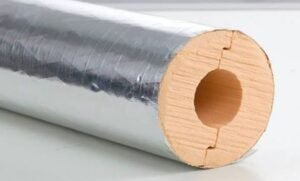
AC Pipe Insulation: A Simple Guide to Insulating Copper Lines
Read More →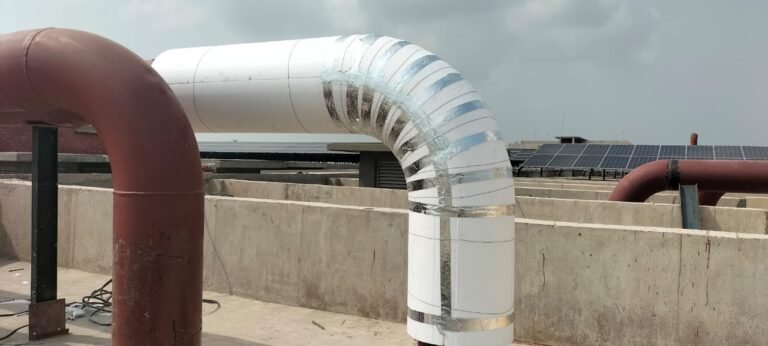
Water Pipe Insulation: Beating Summer Heat and Winter Frost
Read More →