A split AC connects its indoor and outdoor units with two copper pipes. One of them carries very cold refrigerant. If that pipe is bare, water forms on it in our humid weather, the cooling you pay for leaks into the wall, and the drips can stain your paint. AC pipe insulation fixes all three.
Why AC pipes need insulation
- No more dripping. A cold pipe in warm air collects water droplets. Insulation keeps the surface from getting that cold.
- Better cooling. Without insulation, the refrigerant picks up heat on its way back to the compressor. The AC works harder to make up for it.
- Protects the compressor and walls. Less strain on the unit, and no damp patches or paint damage.
Which pipe needs insulation?
A split AC has two lines:
- The thicker line (suction line). This one is cold. It must always be insulated.
- The thinner line (liquid line). This one is warmer. Insulating it is also recommended, especially in hot climates or where it runs through a hot roof or ceiling space.
Also insulate the drain pipe if it runs through a ceiling or a warm space. For household water lines, see our guide to water pipe insulation, and for cold lines with straight runs, thermopore pipe sections.
Which material to use
| Material | Pros | Cons |
|---|---|---|
| NBR foam | Flexible, closed-cell, handles bends, resists moisture, long-lasting | Costs more than PE |
| PE foam | Lowest cost, easy to find | Less durable, weaker outdoors |
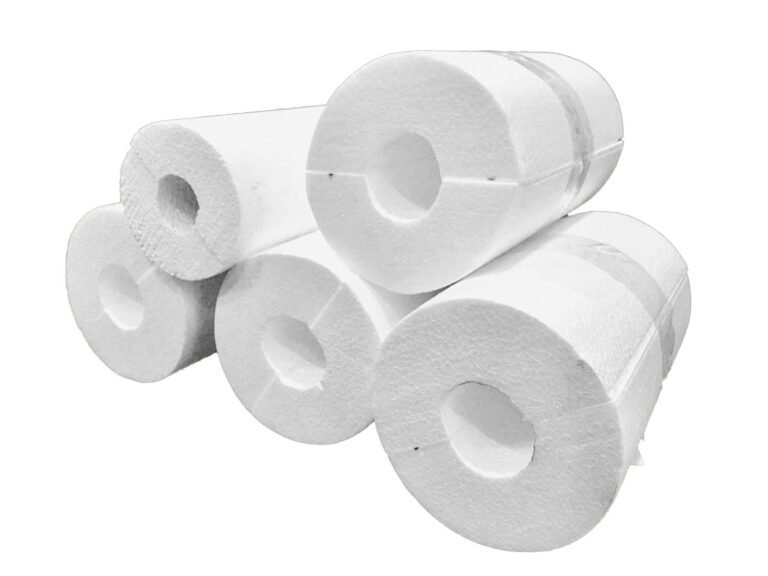
| EPS sections | Cheap, light | Rigid, poor on bends, not suited to thin copper lines |
For most homes, NBR foam is the safest choice. See our full comparison for more detail.
How thick should it be?
Thickness depends on the pipe size and how hot and humid the space is. This is the common guidance for NBR foam:
| Thickness | Use it for |
|---|---|
| 9 mm | Tight spaces, short runs, small domestic ACs |
| 13 mm | Standard split AC and HVAC. The most common choice. |
| 19 mm | Refrigeration, low-temperature lines, or where 13 mm still sweats |
| 25 mm | Commercial and high-specification jobs |
Foam tubes usually come in 2 m lengths, and you pick the size to match the outside diameter of your copper pipe. In a very hot roof space, go one step thicker. Follow the AC maker’s instruction if they give one, or ask us if you are unsure.
How to insulate AC pipes: step by step
- Pressure-test and check the pipes for leaks before you insulate.
- Slide the foam sleeves onto the pipes before connecting them, if you can. If not, use split-type foam and close it fully.
- Cover the flare joints and the ends so no copper is exposed.
- Seal every joint and seam with tape.
- Do not squeeze or pinch the foam. A flattened section insulates less.
- Tape the two lines together with the drain pipe and the cable, so they run as one neat bundle.
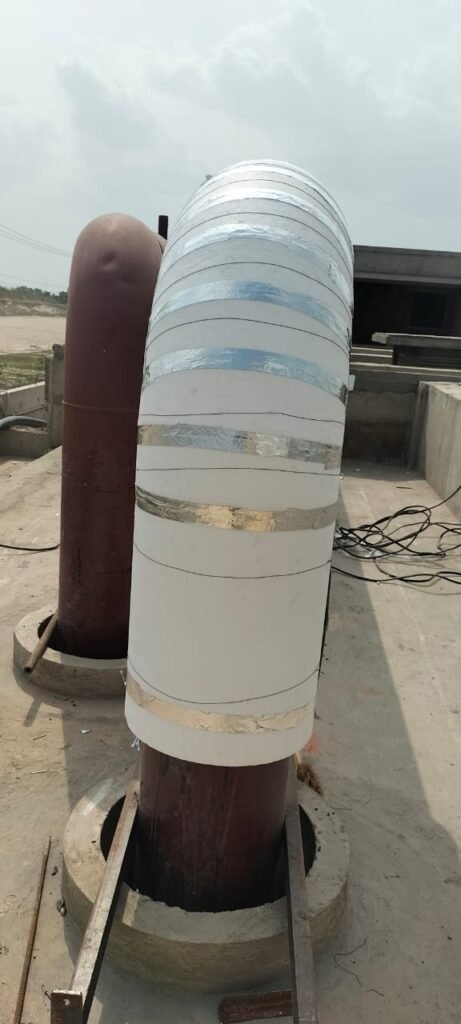
- Protect outdoor sections from sun with UV-resistant tape, a PVC cover or trunking.
Common mistakes
- Insulating only one pipe and leaving the other bare.
- Leaving the bend and joint uncovered.
- Letting the outdoor section sit in sunlight without a cover, which breaks down foam quickly.
- Using thin, cheap foam in a hot roof space.
Frequently asked questions
Tell us the AC tonnage and pipe length. WhatsApp or call +92 300 3679943, or get a quote. Back to the pipe insulation guide.
Related pipe insulation guides
Explore our related solutions
Thermocol Sheet • EPS Technical Data • Cold Storage Insulation • Insulation Material in Pakistan • Get a Free Quote
More pipe insulation guides
Pipe Insulation in Pakistan: Types, Sizes and How to Choose
Read More →
Thermopore Pipe Insulation: What It Is, Where It Works, Where It Doesn't
Read More →
Water Pipe Insulation: Beating Summer Heat and Winter Frost
Read More →