Home / Services / Roof Heat Proofing

Roof Heat Proofing in Lahore & Pakistan

Roof paint can lower a roof's surface a few degrees. EPS, Jumbolon, and PU Foam stop the heat from getting into the room at all. We make the materials that do the second one — and we'll tell you honestly which option fits your roof and your budget.

5–8°C
Cooler indoors with EPS roof insulation
11+ Years
Roof insulation experience
3 Methods
Compared honestly
10–25 yrs
Service life
EPS thermocol sheets for roof heat proofing
Technician in protective suit applying spray polyurethane foam insulationJumbolon XPS insulation sheet

Paint Cools the Roof Surface. Insulation Cools the Room.

A lot of "roof heat proofing" companies in Pakistan sell reflective paint or spray coatings. These products genuinely help — a white or reflective coating can bring the roof's surface temperature down noticeably because it bounces sunlight back instead of absorbing it. That's real physics and it's worth doing.

But there's a difference between cooling the roof surface and cooling the room underneath it. Concrete is a good conductor — even with a cooler surface, heat still works its way through the slab over the course of the day, especially in Lahore, Multan, or Karachi summers above 42°C. Paint slows that transfer down a little. It doesn't stop it.

What we make — EPS Thermocol, Jumbolon, and PU Foam — works differently. Instead of reflecting heat at the surface, it creates a physical barrier underneath or on top of the slab that heat simply can't pass through easily. That's why a 2-inch EPS sheet under your roof can drop indoor temperature by 5–8°C, not just shave a degree or two off a hot roof surface. These are typical results. Actual savings depend on the building, climate, insulation thickness and use. They are not a guarantee.

📞 Ask Which Option Fits Your Roof💬 WhatsApp
Comparing the Real Options

Reflective Paint vs EPS Sheet vs PU Foam Spray

No single option is "best" for everyone — it depends on your roof, your budget, and whether you also have a leakage problem to solve at the same time.

FactorReflective Paint/CoatingEPS / Thermocol SheetPU Foam Spray
What it actually doesReflects sun off the surfaceBlocks heat with a physical barrierBlocks heat + seals roof seamlessly
Typical indoor temp drop1–3°C5–8°C7–10°C
Stops water leakage too?Partially, while coating is freshNo — needs separate waterproofingYes — built-in waterproof seal
How long it lasts2–4 years before re-coating needed10–15 years20–25 years
Typical costLowest upfrontMid-range — about Rs. 30–34/sq.ft (8×4 ft, 2-inch sheet: Rs. 960–1,100)Rs. 45–120/sq.ft
Best forA quick, cheap touch-up before summerNew construction, budget-conscious homesRoofs with leaks + heat together

Indicative factory rates, last reviewed on 8 October 2026. Rates change with fuel and raw-material costs, so please confirm today's rate on WhatsApp +92 300 3679943.

These are typical results. Actual savings depend on the building, climate, insulation thickness and use. They are not a guarantee.

Indicative ranges based on our field experience on Pakistani roofs. Actual results depend on roof type, thickness, orientation and weather; these are not lab test results.

Our honest take: if your roof leaks and gets hot, PU Foam solves both in one job. If your roof is dry and you just want a budget-friendly heat barrier, EPS sheet under the slab is the better value.

Our Three Solutions

What We Actually Install

🧱

EPS Thermocol Sheet — Most Affordable

A rigid foam board fixed under or over the roof slab. The simplest, cheapest way to add a real heat barrier — popular with homeowners building new or doing a straightforward retrofit. We recommend a 2-inch sheet at 20 kg/m³ density for most homes; thinner or lower-density sheets exist but won't give you the same drop in temperature.

See Thermocol Pricing →
🟦

Jumbolon (XPS) — Better Performance per Inch

A denser version of the same idea, with a meaningfully higher R-value and far better resistance to moisture. Worth the extra cost if your roof sees standing water, or if you want stronger insulation without going thicker. Also the right call for basements and below-grade areas where EPS would eventually soak up moisture.

See Jumbolon Pricing →
RECOMMENDED IF YOU ALSO HAVE LEAKS
🫧

PU Foam Spray — Heat Proofing + Waterproofing in One Job

Sprayed directly onto the roof, polyurethane foam expands and hardens into a single, joint-free layer. Because there are no seams or sheet edges, it doesn't just insulate — it seals the entire roof against water at the same time. This is genuinely the best option if your roof has both a heat problem and a leakage problem, since most other methods only solve one or the other. It costs more than a basic EPS sheet, but the combined heat-plus-waterproofing result and 20+ year lifespan usually make it worth it.

See PU Foam Spray Details →

EPS density, thickness and R-value for roofs

EPS thicknessApprox. R-valueTypical density
2 inchabout R-7 to R-820–30 kg/m³ (30–40 where people walk on the roof)
3 inchabout R-11 to R-1220–30 kg/m³ (30–40 where people walk on the roof)

Typical: 2-inch EPS at 20–30 kg/m³ (30–40 where people walk on the roof). R-value approximately R-3.5 to R-4 per inch, so 2" is about R-7 to R-8, 3" about R-11 to R-12.

Quick Guide

Which Option Actually Fits Your Situation?

🏠

New Construction, Tight Budget

Go with EPS Thermocol sheet under the roof slab during construction. Cheapest way to add a real heat barrier, and it's easiest to install before the roof is finished and furnished.

💧

Roof Leaks AND Gets Hot

PU Foam Spray is the practical choice — it solves both problems in a single application instead of paying for two separate jobs (waterproofing membrane + insulation).

🏚️

Basement or Below-Grade Area

Use Jumbolon (XPS), not standard EPS. Its much lower water absorption means it keeps its insulating value even when buried or exposed to constant dampness.

💰

Just Want a Quick, Cheap Fix

A reflective roof coating is fine as a stopgap — it will shave a couple of degrees off before summer. Just go in knowing it won't match what a physical insulation layer does.

🏭

Factory or Warehouse Roof

Large metal or concrete roofs benefit most from PU Foam or thicker EPS — the bigger the surface area, the more the per-degree savings add up on your electricity bill.

🐔

Poultry Shed or Farm Building

EPS Thermocol at 2–3 inch thickness is the standard here — keeps shed temperatures in the range birds need without the higher cost of PU Foam on such large roof areas.

Our Projects

Roof Heat Proofing — Real Installations

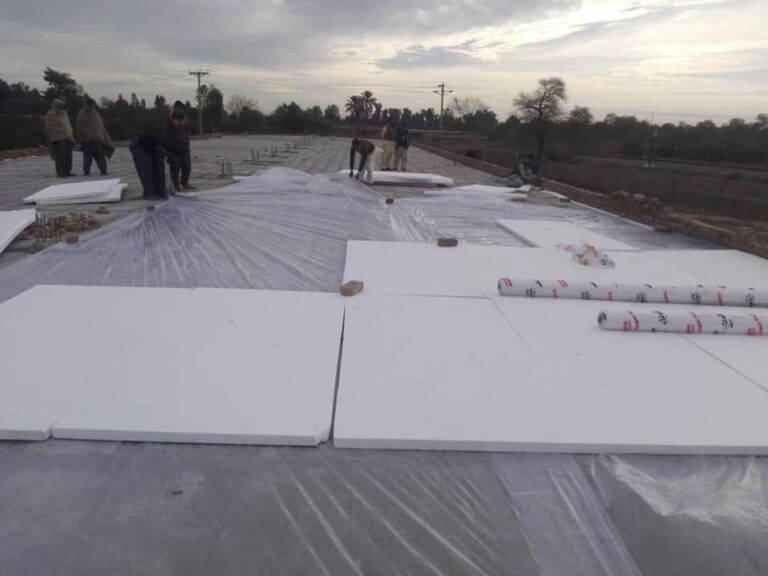
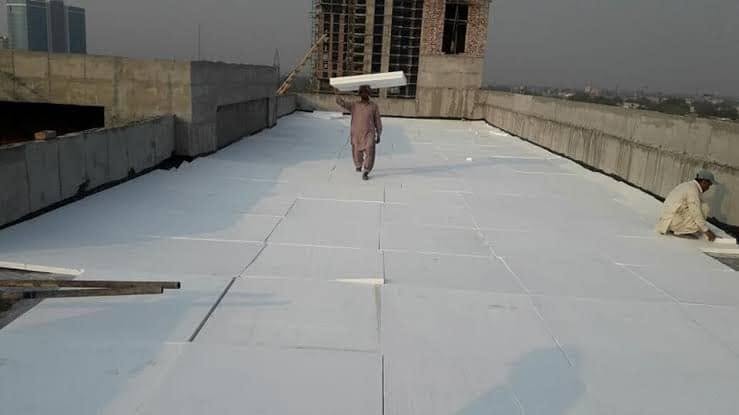
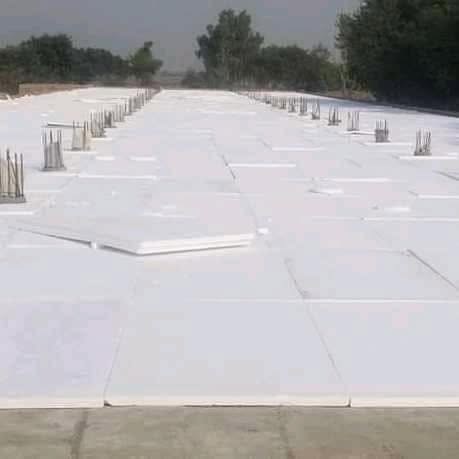
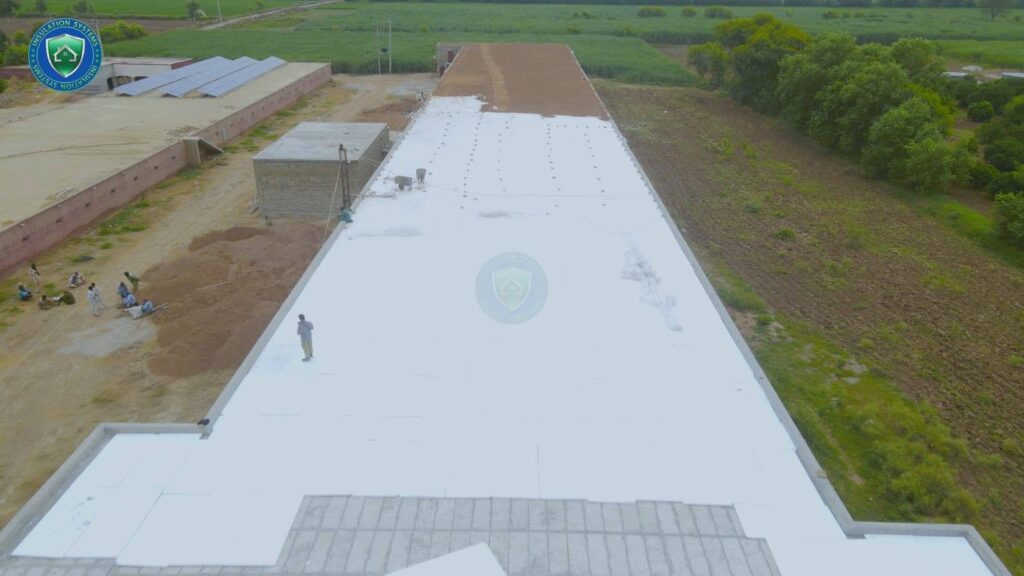
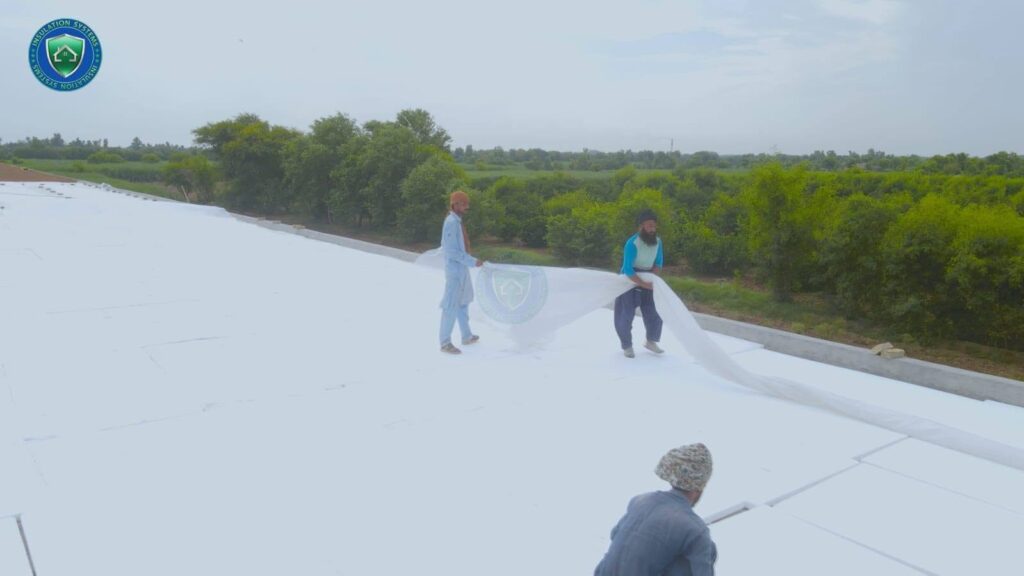
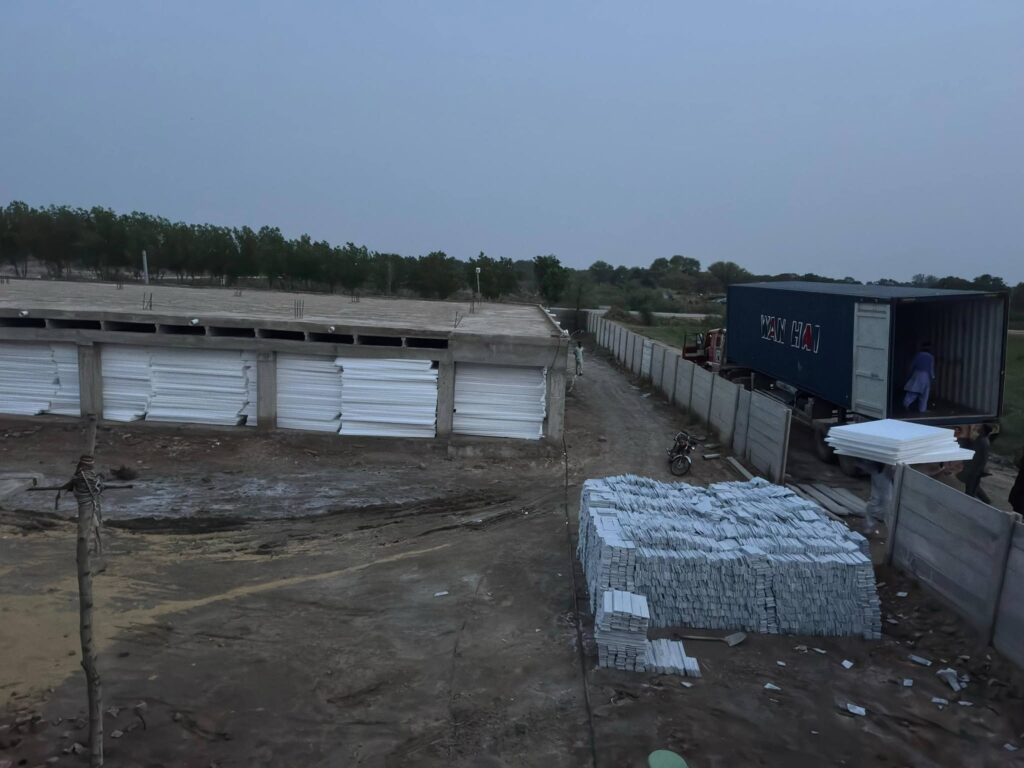
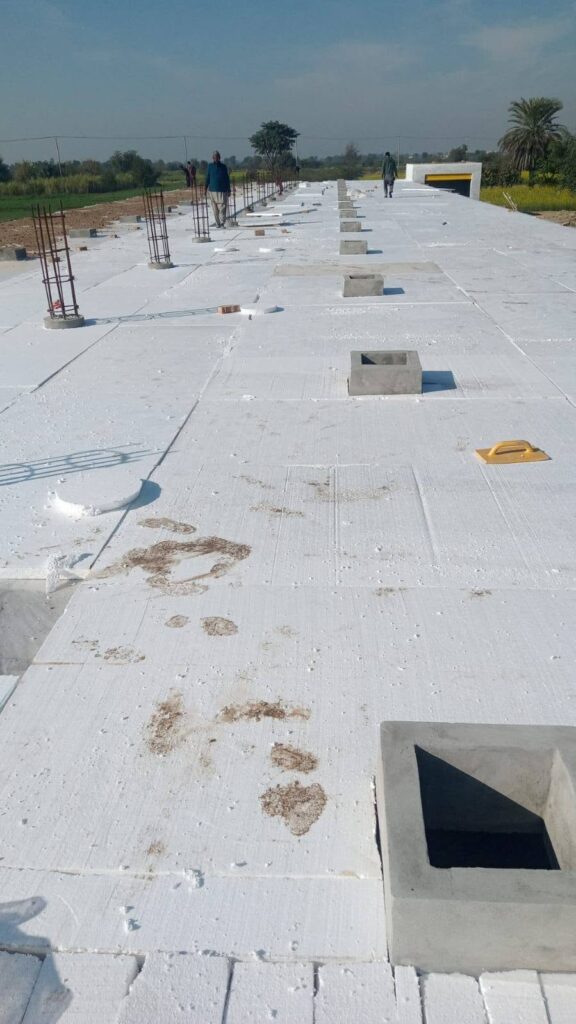
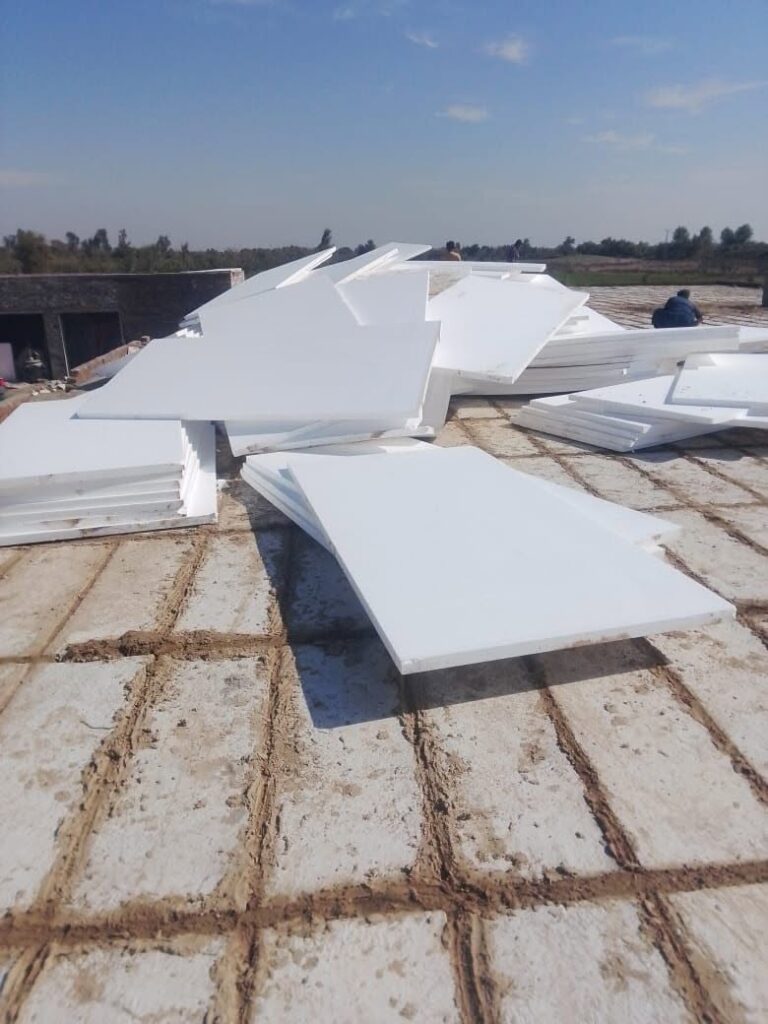
EPS and Thermocol insulation laid on roofs and shed buildings across Pakistan.
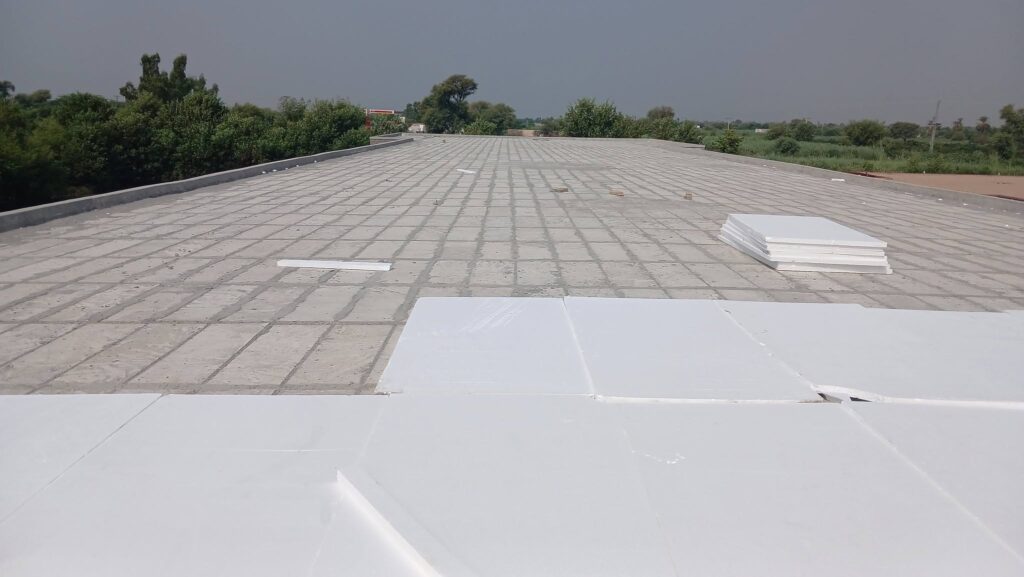
EPS sheets laid on a concrete roof
Roof insulation installation
White EPS roof insulation layer
Large roof covered with EPS sheets
Insulated shed roof from above
Team laying roof insulation
Poultry shed insulation
Roof insulation on a building
EPS boards on a flat roof
FAQ

Questions People Actually Ask Us

Is roof heat proofing paint actually worth doing?

Yes, as a quick and low-cost measure — a reflective coating lowers the roof surface temperature and typically brings indoor temperature down by 1–3°C. But it only slows heat transfer, it does not stop it, and it needs re-coating every 2–4 years.

What's the real difference between heat proofing and waterproofing?

Heat proofing stops heat from entering the room, while waterproofing stops water from leaking in. EPS and Jumbolon only do the first. PU Foam Spray forms a seamless layer that does both in one job.

How much can I realistically expect my electricity bill to drop?

With proper insulation, indoor temperature typically drops noticeably, and homeowners can see lower AC electricity use. Actual savings depend on roof size, insulation type and thickness, and how much you run your AC.

Which option should I choose if I can only afford one thing?

If your roof is dry, a 2-inch EPS sheet gives the best value for money. If your roof also leaks, PU Foam Spray is usually the better single investment because it solves both problems.

Can heat proofing be added to an existing house, or only during construction?

Both. EPS sheets are easiest to install during construction, but PU Foam Spray and sheet insulation can also be applied to an existing roof as a retrofit.

How long does each option actually last before it needs redoing?

Reflective paint or coating lasts about 2–4 years, EPS/Thermocol sheet about 10–15 years, and PU Foam Spray about 20–25 years when properly applied.

Do you offer a free inspection before recommending anything?

Tell us about your roof — leaks, size, budget — via phone or WhatsApp and we will recommend the option that actually makes sense. Call us to ask about a site inspection for your city.

How much does roof heat proofing cost in Pakistan?

EPS thermocol sheets cost about Rs 480 to 1,200 per sheet depending on size, thickness and density. PU foam spray costs about Rs 45 to 120 per sq ft. The final cost depends on your roof size, the thickness you choose and whether waterproofing is included. For a quote, call or WhatsApp +92 300 3679943.

Not Sure Which Heat Proofing Option Fits Your Roof?

Tell us about your roof — leaks, size, budget — and we'll recommend the option that actually makes sense, not just the most expensive one.

📞 +92 300 3679943💬 WhatsApp for Honest Advice📝 Get Quote

Photos from Our Work

White EPS insulation sheets laid on a rooftop for thermal insulation
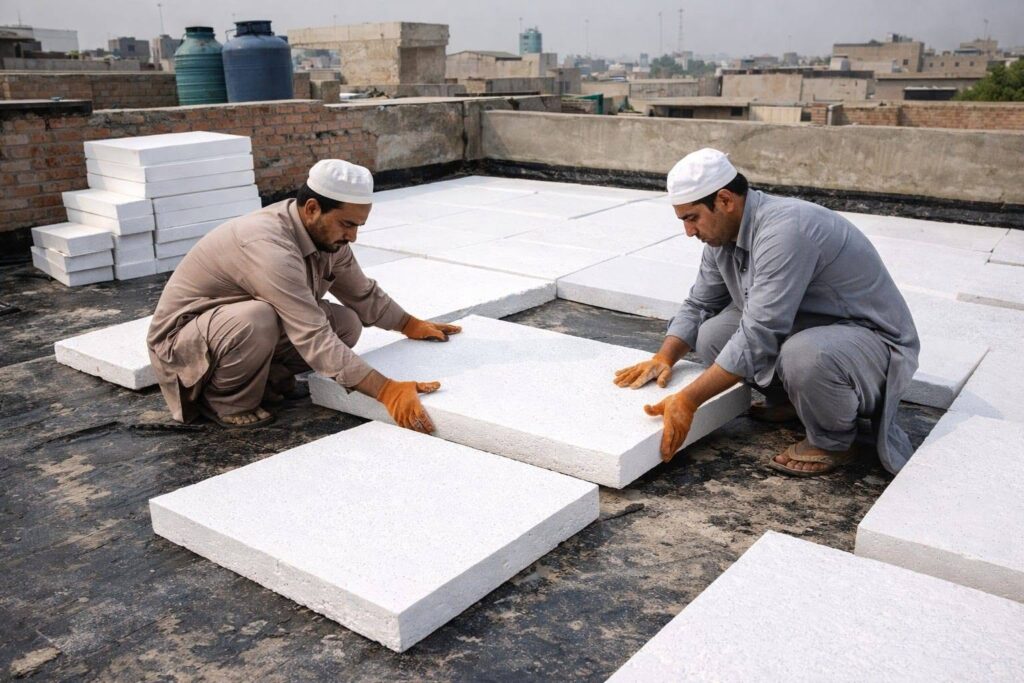
Two workers laying thermocol insulation sheets on a roof for heat proofing
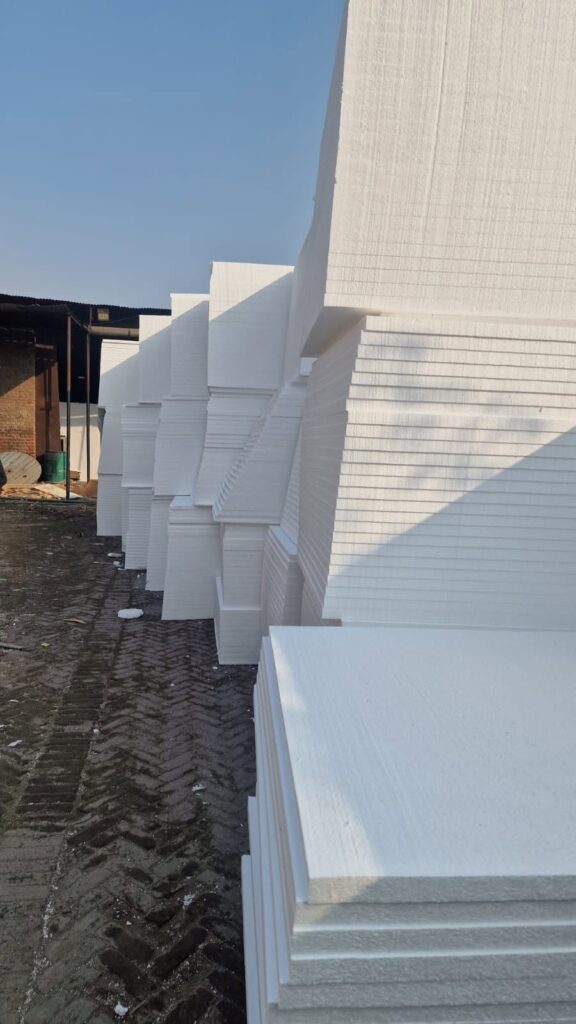
White EPS insulation sheets stacked vertically at storage yard
Call Now Button