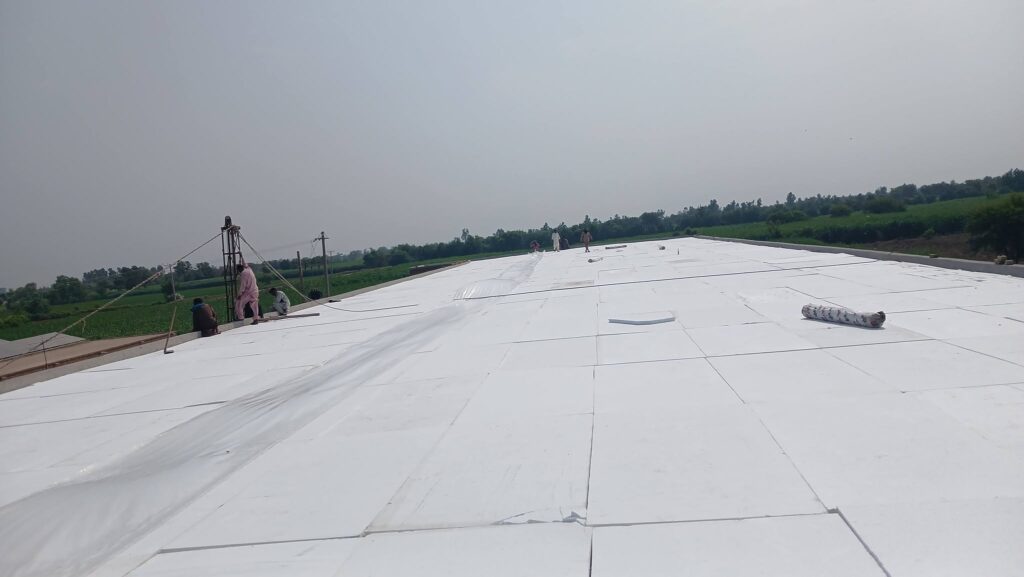
EPS Insulation Sheets Manufacturer in Pakistan
Pakistan's most versatile insulation material — EPS (Expanded Polystyrene) sheets for roofs, walls, cold storage, geofoam, poultry sheds, and packaging. Factory-direct pricing with same-day delivery in Lahore.


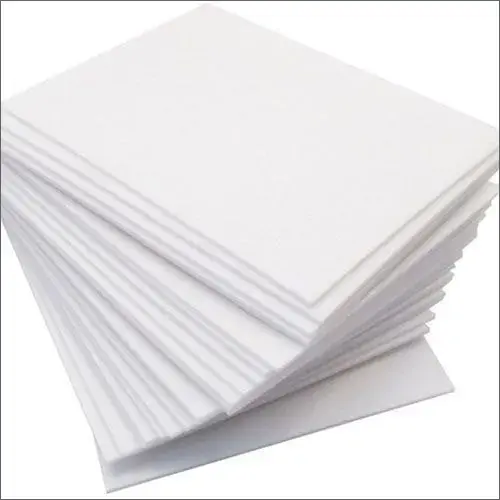
Expanded Polystyrene (EPS) — Pakistan's Most Versatile Insulation
Expanded Polystyrene (EPS) is a lightweight, rigid, closed-cell foam material manufactured from polystyrene beads. These beads are expanded through heat and steam, then molded into sheets, blocks, or custom shapes. The result is a material that is approximately 98% air — giving it exceptional thermal insulation, impact absorption, and moisture resistance at very low weight.
In Pakistan, EPS is known by many names — Thermocol, Thermopore, Thermopole — and is the most widely used insulation material in the country. From residential roof heat insulation to civil engineering geofoam projects, EPS sheets are found across every sector of Pakistan's construction and packaging industry.
Key Properties of Expanded Polystyrene (EPS) Sheets
Why EPS is Pakistan's most popular insulation material — used across homes, factories, cold storage facilities, and civil engineering projects.
Excellent Thermal Insulation
Millions of tiny trapped air pockets provide R-3.5 to R-4 per inch thermal resistance. Reduces roof heat by 5–8°C and cuts AC bills by 30–40% in Pakistan's extreme climate.
Moisture Resistant
Closed-cell structure has low water absorption (ASTM C578 limit is 2–4% by volume depending on class). Does not rot, decay, or grow mold — maintains insulation value even during Pakistan's monsoon season.
Ultra Lightweight
Up to 98% air by volume makes EPS one of the lightest construction materials available. Approximately 1% the weight of soil — dramatically reduces structural loads in geofoam applications.
High Compressive Strength
Despite low weight, EPS provides 70–200 kPa compressive strength. Higher density grades (25–40 kg/m³) handle heavy structural loads without deformation.
Sound Absorption
EPS gives modest sound reduction. For recording studios and strict noise control, use glass wool or rock wool.
Chemically Inert
Does not react with concrete, mortar, or plaster. Non-toxic, odorless, and safe for food packaging, pharmaceutical use, and inhabited spaces.
Easy to Cut & Install
Can be cut with a hot wire cutter, utility knife, or hand saw. No specialized tools or skills needed — suitable for DIY and professional installation.
Fire Retardant Grade
EPS is combustible. Keep it away from flames and heaters, and always cover it (screed, plaster or panel skins). Ask us if a fire-retardant grade is required.
100% Recyclable
EPS is fully recyclable. Insulation System supports eco-friendly practices — used EPS can be repurposed into new construction materials and packaging products.
EPS Sheet Price in Pakistan 2026
Factory-direct pricing from our Lahore facility. Prices vary by size, density, and thickness. Avoid low-density sheets that crush and lose R-value.
| Size | Thickness | Density | Best For | Price (PKR) |
|---|---|---|---|---|
| 3 × 3 ft | 1 Inch | 15 kg/m³ | Packaging, small patches | Rs. 135–160 |
| 4 × 4 ft | 1 Inch | 15 kg/m³ | Ceilings, walls, packaging | Rs. 240–280 |
| 8 × 4 ft | 1 Inch | 15 kg/m³ | Large roof, wall areas | Rs. 480–550 |
| 4 × 4 ft | 2 Inch | 20 kg/m³ | Roof, wall insulation | Rs. 480–560 |
| 8 × 4 ft ⭐ | 2 Inch | 20 kg/m³ | Roof insulation (Most Popular) | Rs. 960–1,100 |
| 8 × 4 ft | 3 Inch | 25 kg/m³ | Walls, partitions, general use | Rs. 1,400–1,600 |
| Custom Block | 4"–30"+ | 10–40 kg/m³ | Geofoam, civil engineering | Call for Quote |
Indicative factory rates, last reviewed on 8 October 2026. Rates change with fuel and raw-material costs, so please confirm today's rate on WhatsApp +92 300 3679943.
Many local shops sell cheap 8–10 kg/m³ recycled EPS that crushes under roof mud and provides zero heat protection. Always demand 20–30 kg/m³ EPS for roof insulation.
EPS Sheet Applications in Pakistan — Complete Guide
From residential roof insulation to large-scale civil engineering geofoam — EPS is Pakistan's most versatile construction and packaging material.
🏠1. Roof Heat Insulation
The most popular EPS application in Pakistan. Sheets placed under or over the roof slab (lenter) or between false ceiling layers create a thermal barrier — reducing indoor temperature by 5–8°C and cutting AC bills by 30–40%. In Lahore, Multan, and Karachi where temperatures exceed 45°C, EPS roof insulation typically pays for itself within 1–2 summers through electricity savings. These are typical results. Actual savings depend on the building, climate, insulation thickness and use. They are not a guarantee.
- ✓ Concrete (RCC) roofs — most common use
- ✓ Metal sheet roofs — factories, warehouses
- ✓ Combined with aluminum foil for max effect
🧱2. Wall Insulation (EWIS)
Exterior Wall Insulation System (EWIS) using EPS sheets reduces wall heat transfer by up to 70% — dramatically lowering AC and heating costs. Applied to external walls using polymer cement adhesive in a staggered pattern, then finished with render or cladding. Also used in cavity wall and partition insulation for noise reduction.
- ✓ Exterior wall insulation system (EWIS)
- ✓ Cavity wall filling
- ✓ Interior partition soundproofing
🐔3. Poultry Farm & Control Shed
EPS sheets are widely used as thermal insulation sheets for poultry control shed roofs across Pakistan. Due to high heat resistance and low thermal conductivity, they create a significant indoor temperature differential — essential for bird health, productivity, and reducing mortality in Pakistan's extreme summers.
- ✓ Roof insulation — reduces heat entry in summer
- ✓ Wall lining — improves temperature regulation
- ✓ Maintains optimal 22–27°C for bird health
- ✓ Lowers heating costs in winter
❄️4. Cold Storage Insulation
High-density EPS (30–40 kg/m³) is widely used in cold storage room construction — walls, ceilings, and floors. Minimizes heat transfer, prevents condensation, and lowers compressor load. Moisture-resistant EPS maintains insulation value even in freezer environments where lesser materials would absorb moisture and lose effectiveness.
- ✓ Cold room walls, ceiling, and floor
- ✓ Fish and meat cold storage
- ✓ Pharmaceutical cold chain facilities
🏗️5. EPS Geofoam — Civil Engineering
EPS Geofoam is a lightweight fill material used in construction and civil engineering projects across Pakistan. It is approximately 1% the weight of soil and less than 10% the weight of other fill materials — dramatically reducing loads on weak soils and structures while speeding up construction and lowering costs.
• 1% weight of soil fill
• Improves soil stabilization
• Reduces settlement risk
• Thermal insulation for foundations
• Moisture resistant — long-lasting
• 100% recyclable and eco-friendly
→ Road embankments
→ Bridge approach fills
→ Slope stabilization
→ Stadium and theatre seating fill
→ Building foundations on soft soil
→ Green roofs and landscaping
📦6. Packaging & Industrial
EPS foam is widely used for protective packaging of fragile goods, electronics, appliances, medical equipment, and temperature-sensitive products. Its shock-absorbing, moisture-proof, and lightweight properties make it the global standard for industrial and commercial packaging.
- ✓ Electronics and appliances — shock protection
- ✓ Fish and food packaging
- ✓ Pharmaceutical cold-chain packaging
- ✓ Custom industrial trays and inserts
- ✓ Void fill and protective wrapping
- ✓ Export packaging for international shipments
EPS Sheet — Technical Data
| Property | Specification |
|---|---|
| Material | Expanded Polystyrene (EPS) |
| Density Range | 10 – 40 kg/m³ (custom available) |
| Thermal Conductivity | 0.033 – 0.040 W/m·K |
| R-Value per inch | R-3.5 to R-4.0 |
| Compressive Strength | 70 – 200 kPa (density dependent) |
| Water Absorption | Low water absorption (ASTM C578 limit is 2–4% by volume depending on class) |
| Operating Temperature | Approximately −50°C to +70°C |
| Standard Sheet Sizes | 3×3 ft, 4×4 ft, 8×4 ft, custom |
| Thickness Available | 0.5" to 30"+ (custom geofoam blocks) |
| Fire Rating | FR grade available; EPS is combustible |
| Recyclability | 100% recyclable |
Which Density to Choose?
EPS Manufacturer in Lahore
📞 Get EPS Sheet Quote Today
Tell us your project type, required size, thickness, and city — we'll give you factory-direct pricing within about 30 minutes.
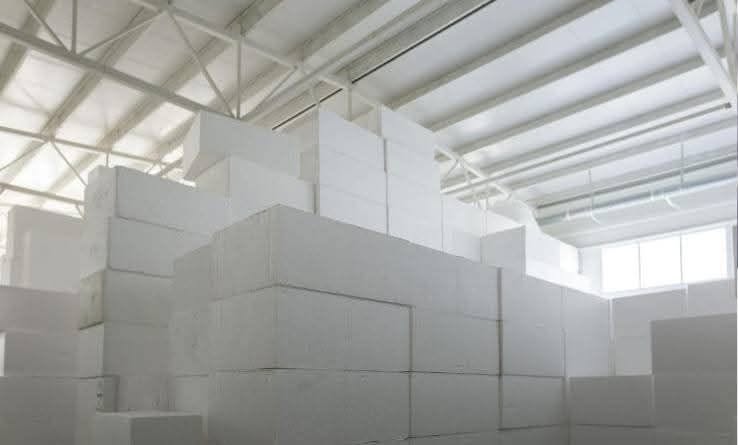
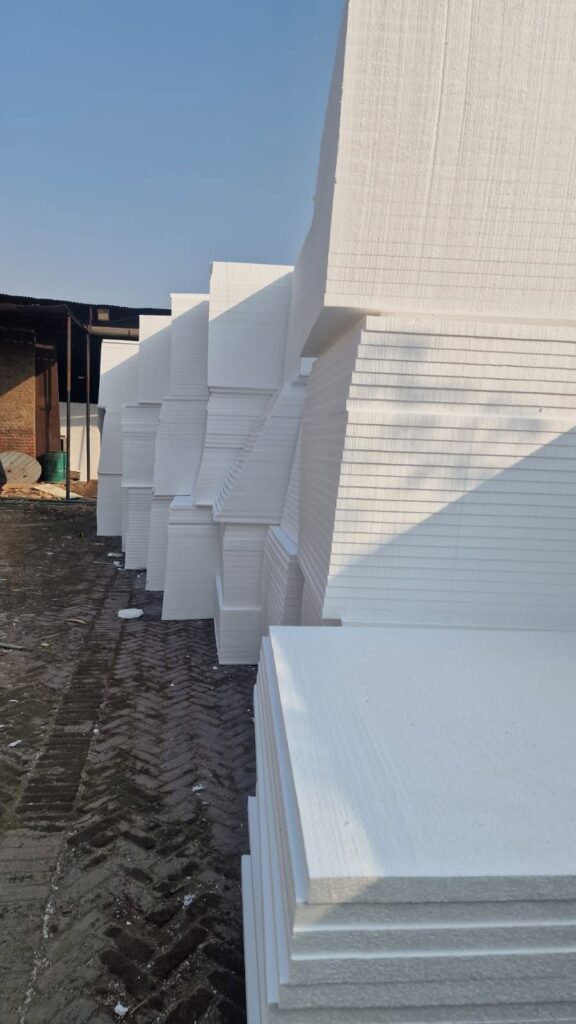
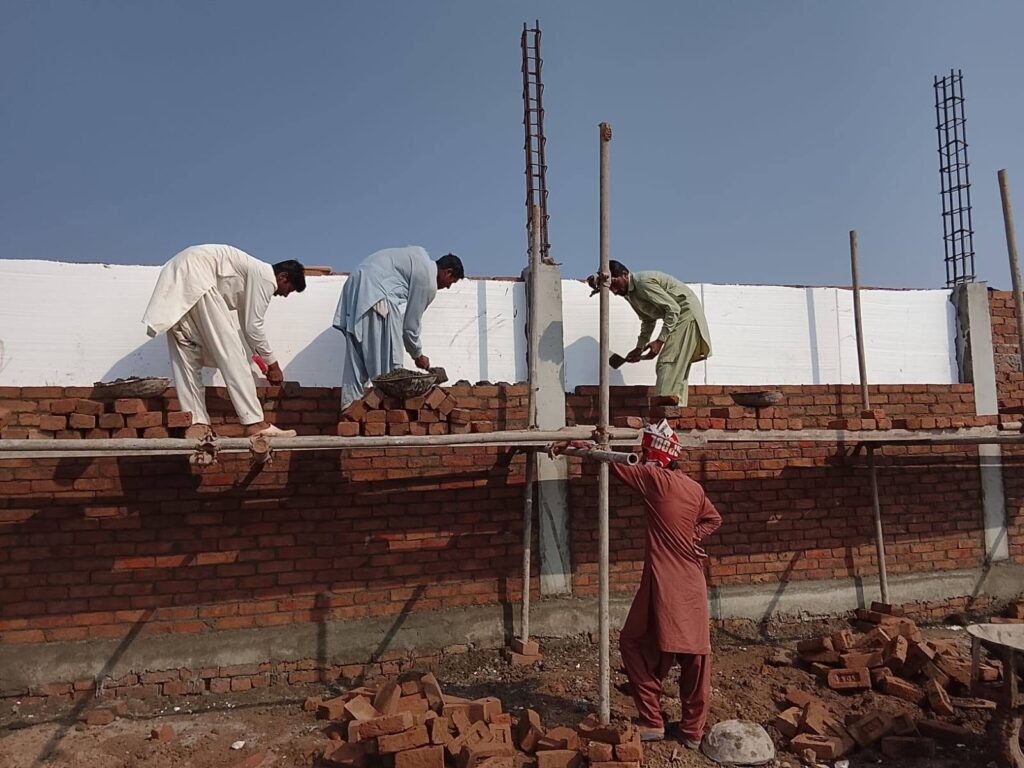
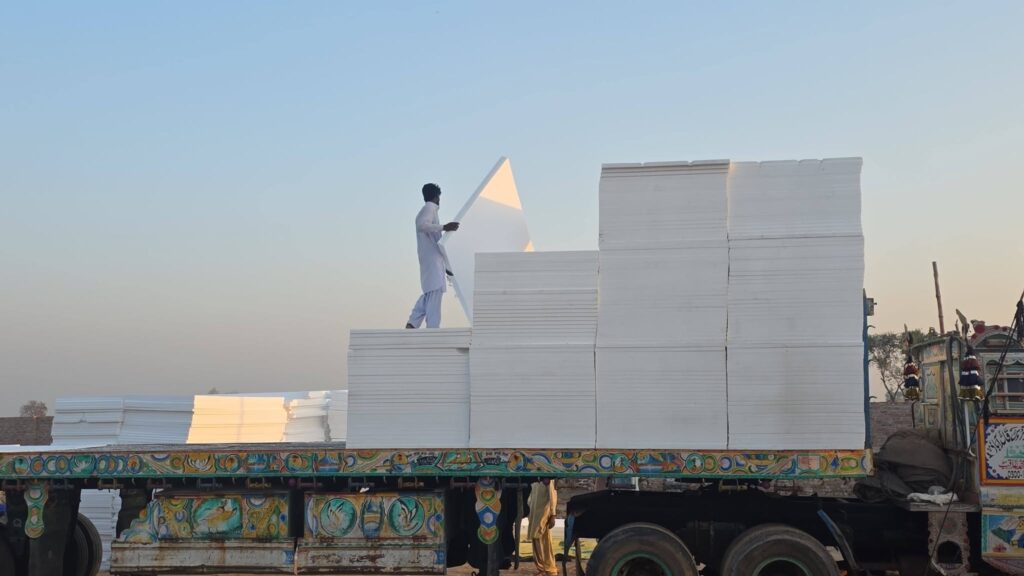
EPS Sheets — Made in Lahore, Supplied Nationwide
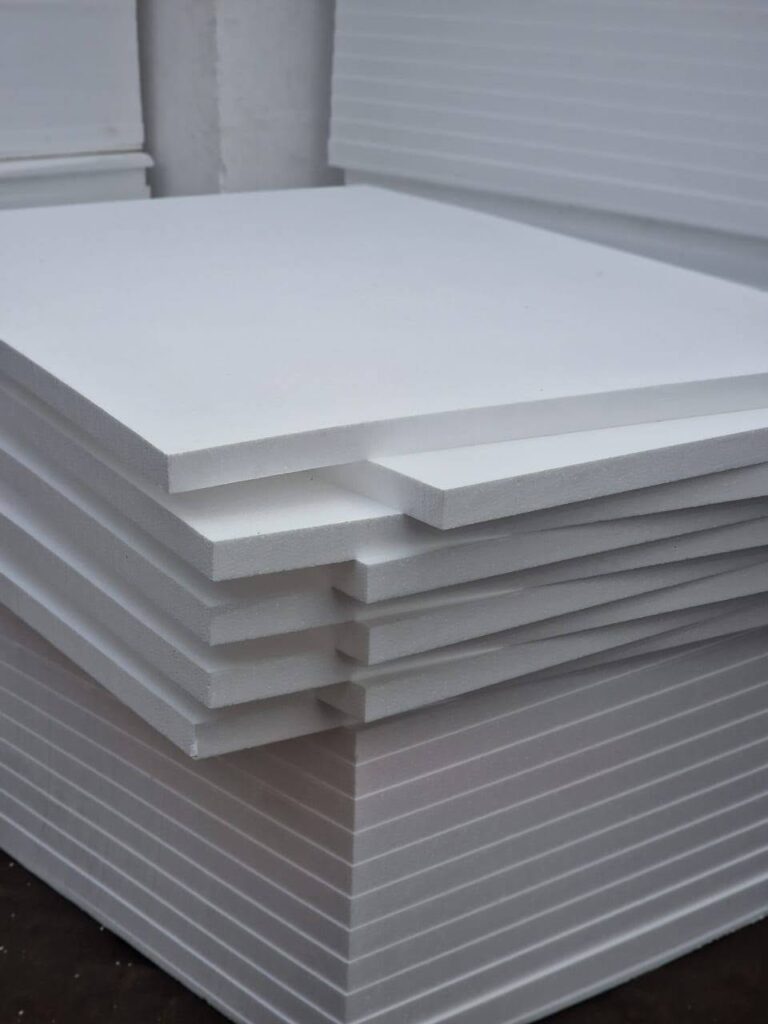
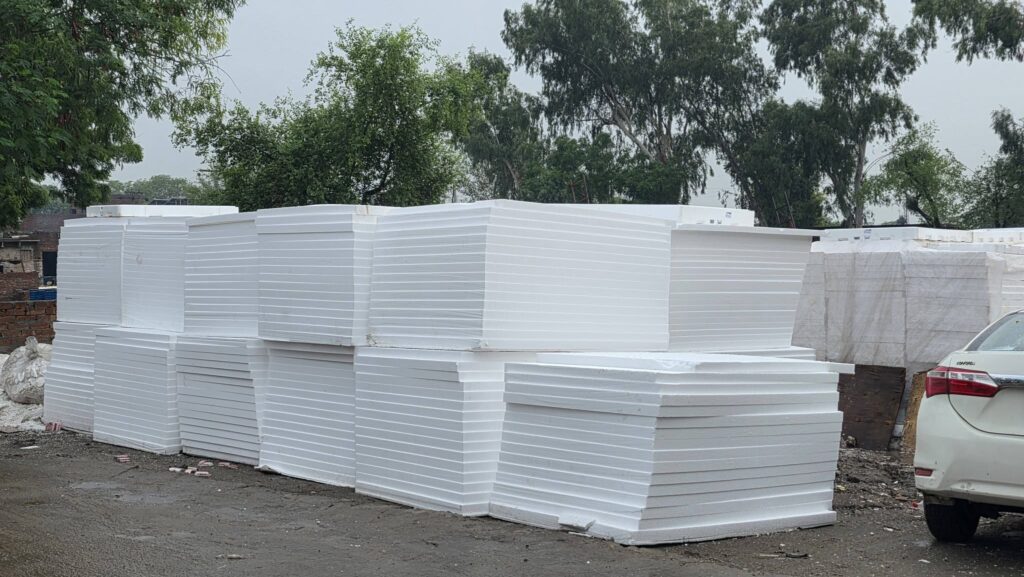
Stacked EPS blocks and sheets from our factory, site installations and truck loads ready for delivery.
Expanded Polystyrene Sheet — Frequently Asked Questions
What is Expanded Polystyrene (EPS) Sheet?
Expanded Polystyrene (EPS) is a lightweight, rigid, closed-cell foam made from polystyrene beads expanded with heat and steam, then molded into sheets and blocks. It is about 98% air, which gives it excellent thermal insulation, impact absorption, and moisture resistance. In Pakistan it is also called Thermocol, Thermopore, or Thermopole.
What is the EPS sheet price in Pakistan 2026?
EPS sheet prices depend on size, thickness, and density. Examples from our Lahore factory: 3×3 ft 1-inch Rs. 135–160, 4×4 ft 1-inch Rs. 240–280, 8×4 ft 1-inch Rs. 480–550, 8×4 ft 2-inch (20 kg/m³, most popular for roofs) Rs. 960–1,100, and 8×4 ft 3-inch (25 kg/m³) Rs. 1,400–1,600. Custom geofoam blocks are quoted on request — call +92 300 3679943.
What are the key properties of EPS Sheet?
EPS offers R-3.5 to R-4 thermal resistance per inch, low water absorption (ASTM C578 limit is 2–4% by volume depending on class), compressive strength of 70–200 kPa, an operating range of approximately −50°C to +70°C, easy cutting and installation, optional fire-retardant (FR) grades, and is 100% recyclable.
How is EPS Sheet used in building construction in Pakistan?
EPS is used for roof heat insulation (under the lenter or in false ceilings), exterior wall insulation (EWIS), cavity walls, partitions for sound reduction, poultry shed roofs, cold storage rooms, and as geofoam lightweight fill in civil engineering projects.
What is EPS Geofoam and how is it used in Pakistan?
EPS Geofoam is a lightweight fill material that weighs about 1% of soil. It is used for road embankments, bridge approach fills, slope stabilization, stadium and theatre seating fill, foundations on soft soil, and green roofs. Projects should involve a qualified geotechnical engineer for correct density selection and specification.
What densities and thicknesses are available for EPS sheets?
We supply densities from 10 to 40 kg/m³ and thicknesses from 0.5 inch up to 30 inches or more for custom blocks. For roof insulation we recommend 16–20 kg/m³ (20 kg/m³ is the standard), 30–40 kg/m³ for cold storage and poultry sheds, 20–30 kg/m³ for roofs, and 35–40 kg/m³ for geofoam.
Is EPS Sheet safe for food packaging?
Yes. EPS is chemically inert, non-toxic and odorless, and is widely used for fish and food packaging.
How do I dispose of or recycle EPS sheets?
EPS is 100% recyclable. Used EPS can be collected and repurposed into new construction materials and packaging products. Contact Insulation System to learn about eco-friendly disposal and recycling options.
Do you supply EPS sheets outside Lahore?
Yes. We deliver the same day within Lahore for urgent in-stock orders, and usually in 1–3 days to Karachi, Islamabad, Faisalabad, Multan, Peshawar, Sukkur, Hyderabad and other cities across Pakistan, depending on city and order size, with bulk project supply available nationwide.
Order EPS / Expanded Polystyrene Sheets — Factory Direct!
All densities 10–40 kg/m³. Standard sheets to large geofoam blocks. Same-day delivery in Lahore for urgent in-stock orders; usually 1–3 days to other major cities. Bulk project pricing available.
📞 +92 300 3679943💬 WhatsApp Quote📝 Get QuotePhotos from Our Work